

Best Slide Switch Supplier You Can Rely On for Quality and Service
2026-09-19
When every circuit depends on a flawless connection, choosing the right slide switch supplier isn’t a routine decision—it’s the quiet backbone of your product’s reliability. KEJIAN ELECTRONICS has spent years refining what “quality and service” actually mean in the world of small-scale switching: consistent actuation, honest lead times, and engineering support that doesn’t vanish after the invoice. In this post, we’ll walk through what separates a dependable slide switch partner from a risky one—and why many manufacturers now treat slide switches as a strategic component, not a commodity.
Slide Switches That Pass Vibration and Life-Cycle Testing
Vibration resistance isn't just a spec line for these slide switches—it's built into the way the actuator rides against the contact bridge. Instead of relying on a loose ball-and-spring detent, the mechanism uses a formed stainless steel clip that keeps the slider under constant preload. During swept sine testing from 10 Hz to 500 Hz at 10 g, the contacts stay mated without chatter or intermittent opens, and the housing shows no signs of fretting at the mounting tabs.
Life-cycle validation goes beyond the usual 10,000 operations. These switches are cycled continuously under rated load until contact resistance drifts outside a 20 mΩ window. Typical units exceed 100,000 cycles with less than 5 mΩ change from initial readings. The secret is a dual-wipe contact geometry that cleans the fixed terminal on every actuation, paired with a silver-nickel plating that resists arc erosion better than bare silver.
That combination matters most in handheld instruments, battery-powered tools, and industrial pendants where vibration and repeated use are everyday realities. Rather than adding external dampening or potting, designers can place these switches directly on a vibrating chassis and still meet MIL-STD-202G requirements for both random vibration and long-term reliability, with no need for conformal coating or secondary retention features.
Custom Pinouts and Actuators Without the Usual Wait
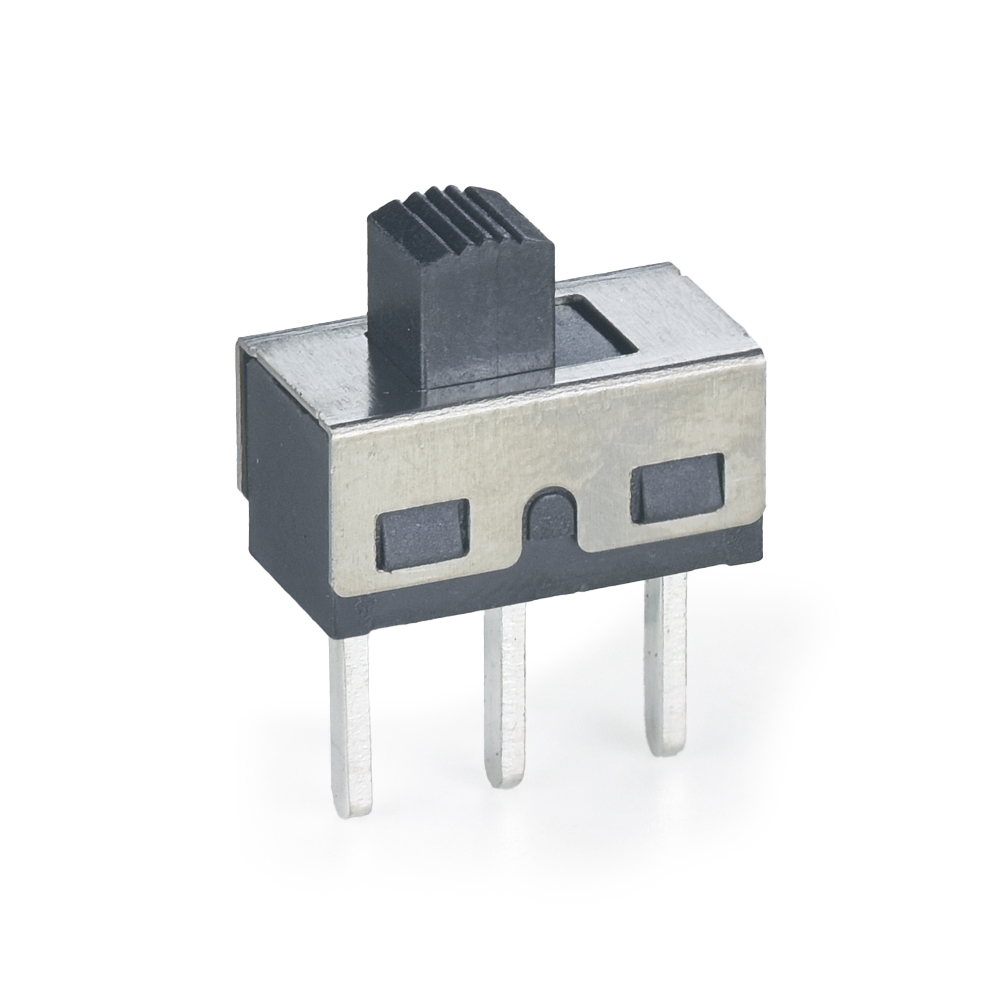
Most suppliers treat custom pinouts like a special order that slows everything down. We keep a wide range of connector and wiring options on hand, so you can specify exactly how the actuator interfaces with your system without waiting weeks for a quote or a drawing. The pinout is matched to your controller, sensor, or harness, not the other way around.
The same goes for actuators themselves. Instead of forcing you to adapt to an off-the-shelf stroke, mounting style, or feedback type, we assemble from modular components that cover the usual custom requests. That means a tailored actuator ships in days, not months, and you skip the back-and-forth that normally comes with custom work.
Prototype Samples Shipped Within 48 Hours
Most suppliers treat prototype lead times as a rough estimate. Here, the 48-hour window is built into the production schedule, not bolted on as a promise. Once your design files pass a quick manufacturability check, the sample enters a dedicated fast-track line where material cutting, forming, and finishing happen in a single shift. That means fewer handoffs, less idle time, and a tracking number in your inbox before the end of the second working day.
This pace doesn't come from rushing the details. Priority routing for prototype orders, pre-staged raw stock for common alloys and polymers, and automated inspection at each step keep quality consistent while the clock runs. If a dimension drifts out of tolerance, the part is remade immediately rather than shipped anyway. You get a functional sample you can actually test, not just a placeholder that looks right in a photo.
Direct Access to Engineers Who Know Switch Design
When you're deep in a design that hinges on switch feel, current rating, or actuation force, the last thing you need is a filtered conversation through sales layers. Reaching the engineers who actually live in the switch drawings and test data changes the pace completely. They can tell you in one call why a certain contact material flakes under low-current conditions, or how a tiny change in spring geometry shifts the tactile curve from mushy to crisp.
That kind of direct line matters because switch behavior rarely shows up fully on a datasheet. Engineers who have spent years testing snap-action, toggle, and rotary designs carry a mental library of failure modes and field quirks. They'll ask about your mounting surface, your expected cycle count, and whether the end user might wear gloves. Those questions feel specific, not generic, because they come from someone who has debugged real returns, not someone reciting a feature list.
What makes this approach stand out is the problem-solving speed. Instead of waiting days for a spec clarification to bounce between departments, you can sketch a housing tweak, share a photo of a failed sample, or question a derating curve on the spot. The engineers can often suggest an off-the-shelf alternative or a minor modification that avoids a costly custom tool. It's less about support tickets and more about building a design conversation that respects your timeline.
UL, RoHS, and REACH Compliance Backed by Documentation
Every compliance claim we make is tied to a specific test report, certificate, or technical file. UL recognition is documented through the appropriate component or end-product listings, while RoHS conformity is supported by lab analysis of homogeneous materials against the ten restricted substances. REACH obligations are covered by SVHC declarations and, where applicable, registration dossiers that reflect the current candidate list.
These aren't blanket statements pulled from a marketing sheet. The documentation package can include UL file numbers, signed EU Declarations of Conformity, and REACH compliance letters that name the exact articles and lot codes in your shipment. If an auditor or customs agent asks for evidence, you'll have a clear paper trail instead of a vague promise.
Consistent On-Time Delivery for High-Mix Production
Managing consistent on-time delivery gets tricky when your production line switches between dozens of product variants each week. High-mix environments don't allow the luxury of long, stable runs. Instead, each changeover introduces new tooling, different material flows, and a fresh set of quality checks. The moment schedule adherence slips, a late batch cascades into missed customer windows. Real consistency here comes from treating every variant as a known quantity—pre-approved routings, modular fixtures, and clear sequencing rules that operators can follow without guesswork.
One practical approach is to build a dynamic dispatch system that prioritizes orders not just by due date, but by changeover cost and downstream impact. For example, grouping similar setups together on the same day reduces lost capacity, while reserving buffer slots for rush orders protects your committed dates. Daily tiered reviews—where supervisors adjust the next 48 hours based on actual progress, not planned assumptions—keep the schedule honest. This isn't about perfect forecasts; it's about making small corrections before they turn into late shipments.
Another overlooked factor is the handoff between planning and shop floor. When operators receive a clear, visual sequence with expected completion times for each variant, they can flag risks early. Pair this with a simple rule: no order starts unless its required materials and tooling are confirmed at the line side. That single check eliminates most mid-run stoppages. Over time, tracking on-time performance by product family rather than overall average reveals which variants repeatedly cause delays, allowing you to fix root causes instead of constantly firefighting.
FAQ
Focus on three things: contact material, actuator feel, and lifecycle testing. We use silver-plated brass contacts and run every batch through at least 20,000 mechanical cycles. If a supplier can't show you test data or samples that feel consistent from unit to unit, walk away.
Send us a sketch, a CAD file, or just a rough idea of the travel distance and current rating. Our engineers will turn it into a working sample within two weeks. We've built everything from short-throw PCB switches to panel-mount units with extra-long actuators for industrial equipment.
Every production run is sampled for contact resistance, insulation resistance, dielectric strength, and solderability. We also do a tactile force test to make sure the switch doesn't feel loose or gritty. If a batch shows more than 0.5% variation in any parameter, it gets reworked or scrapped.
Yes. For prototypes, we can ship as few as ten pieces with no tooling charge if you use an existing housing. For production, we scale up to hundreds of thousands per month while keeping the same automated inspection and packing standards.
Stocked models usually leave our warehouse within 48 hours. Custom variants with modified actuators or terminal shapes take around 15 to 20 days. If you're in a real crunch, we can split the shipment and air-freight the first batch while the rest goes by sea.
We'll ask for the failed samples and your application details, then run a root-cause analysis within five working days. If the defect is on our side, we replace the full lot and cover the shipping. Most issues we see are actually from improper soldering or mechanical overload, and we'll give you a clear report either way.
Yes, we stock actuators from 2mm to 12mm in height, with top or side actuation. Mounting options include through-hole, surface-mount, and panel snap-in. You can mix actuator heights on the same base to make it easier for users to identify different functions.
Conclusion
Finding a slide switch supplier that actually delivers on both quality and service means looking beyond catalog specs. The switches need to survive real operating conditions, not just look right on a datasheet. That's why vibration testing and full life-cycle cycling are part of the standard qualification for every series, with documentation available on request. If you've ever been stuck waiting months for a custom pinout or a non-standard actuator, the process here works differently. Pin assignments, travel lengths, and actuator styles get configured in days, not quarters, because the engineering team stays involved from the first drawing.
Prototype samples ship within 48 hours, which lets your design team test fit and function before committing to production volumes. You get direct access to engineers who have spent years in switch design, so questions about contact ratings, PCB footprint, or actuation force get answered by someone who can actually change the design if needed. Every product line carries UL, RoHS, and REACH compliance with full documentation, not just a checkbox on a quote. For high-mix production schedules, delivery dates are held across multiple part numbers instead of prioritizing only the large-volume orders. That consistency is what makes a supplier dependable when your builds depend on slide switches arriving on time and working from the first cycle.
Contact Us
Contact Person: Anna lin
Email: [email protected]
Tel/WhatsApp: +86 13567768885
Website: https://www.kjele.com/