

Best Wall-Mounted Active Harmonic Filter Supplier for Superior Power Quality
2026-10-13
If your facility struggles with unexplained equipment failures, voltage distortion, or rising energy costs, harmonics might be the culprit. The most effective fix is a wall-mounted active harmonic filter—but choosing the right supplier makes all the difference. GEYA has earned a reputation as one of the best in the field, delivering superior power quality in a space-saving design.
Why Wall-Mounted Active Harmonic Filters Fit Where Others Can't
Space inside electrical rooms rarely comes with a surplus. Floor-standing units demand a footprint that many facilities simply don't have, especially in retrofit projects or compact switchgear layouts. Wall-mounted active harmonic filters sidestep that problem by using vertical surface area that would otherwise go unused. They mount directly next to or above existing panels, leaving walkways clear and freeing up valuable floor space for other equipment.
Beyond saving square footage, their placement often shortens cable runs. Instead of routing conductors across the room to a bulky cabinet, installers can connect the filter close to the nonlinear load or the point of common coupling. Shorter cable lengths reduce voltage drop, lower installation cost, and make commissioning less of a headache. This is particularly useful in older buildings where conduit paths are already crowded and adding a large enclosure would require major rework.
Wall-mounted designs also prove handy in environments with irregular layouts, mezzanines, or low ceilings. They can be positioned above door height or tucked into narrow alcoves where a floor-standing version could never fit. For maintenance teams, that means harmonic mitigation doesn't have to compete with everyday operations for room to move around switchgear and other critical assets.
The Supplier's Role in Achieving Superior Power Quality
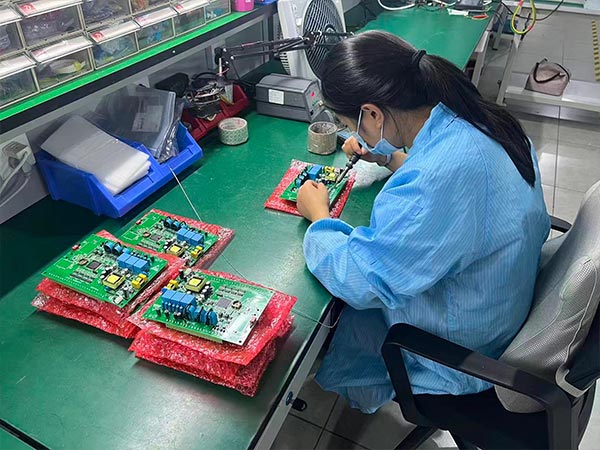
A supplier's influence on power quality starts long before installation. The components they provide—capacitors, inductors, filtering assemblies, or power conversion modules—carry tolerances and thermal profiles that directly shape harmonic distortion, voltage stability, and transient response. Rather than simply shipping parts, a capable supplier works with the design team to match component characteristics to the expected load profile, flagging risks like resonance points or inrush behavior that might otherwise surface only during field commissioning.
Beyond component selection, the supplier's testing and documentation practices set the ceiling for achievable performance. Full-load characterization, partial discharge measurements, and frequency response plots give engineers the data needed to predict how the system will behave under non-linear loads. When a supplier provides repeatable, traceable test results instead of typical datasheet curves, it becomes possible to tune passive filtering or active compensation with much tighter margins, avoiding the trial-and-error that degrades power quality in the finished installation.
Ongoing support closes the loop. Power quality is not static; load mixes change, utilities adjust their requirements, and components age. A supplier that monitors field failures, publishes derating guidance, and offers replacement parts with equivalent or better electrical characteristics helps maintain the original performance envelope. In contrast, a supplier who treats the sale as a one-time event often leaves the end user vulnerable to gradual drift in voltage regulation and harmonic levels, undermining the entire power quality strategy.
Technical Specs That Actually Predict Filter Performance
Most datasheets lead with nominal efficiency, but real-world performance hinges on two numbers rarely printed side by side: initial pressure drop and dust-holding capacity at the final pressure drop. An air filter that starts at 0.35 in. w.g. and climbs to 1.0 in. w.g. after 90 days tells you more than a single MERV rating ever will. If the manufacturer won’t publish a loading curve, treat the high efficiency claim as decorative.
For liquid filters, skip the absolute micron number and ask for beta ratio under cyclic flow conditions. A β10 = 1000 from a steady-state lab test looks impressive, but if the filter sheds fibers or collapses during pressure spikes, the field result is a bypass valve opening. The spec that matters is the collapse/burst rating combined with the fatigue cycle data—those two predict whether the element survives Tuesday, not just the test bench.
Don’t ignore ISO 16890’s ePM values in favor of legacy MERV. The newer standard grades filters by particle size fractions that actually enter human lungs, so a filter rated ePM1 70% will consistently remove more fine particulate than a MERV 13 with a similar mechanical efficiency. Pair that with the manufacturer’s stated energy index, and you get a performance fingerprint that resists marketing inflation.
Installation Mistakes That Undermine Harmonic Correction
Many installations fail to achieve expected harmonic correction because the passive filters are connected without proper evaluation of the network's existing resonance points. Simply installing a detuned capacitor bank at a location with high harmonic distortion can shift the resonant frequency into a range that amplifies rather than attenuates specific harmonics, leading to overheating and premature equipment failure.
Another common oversight is neglecting the effect of cable impedance and transformer reactance when sizing the filter reactors. Engineers often rely on generic detuning factors like 7% or 14% without measuring the actual system impedance, which can result in a filter tuned too close to a dominant harmonic and causing excessive current through the capacitors. This mismatch not only reduces correction efficiency but also increases voltage distortion upstream.
Improper connection of current transformers or voltage sensing leads is equally damaging. If the control system receives inaccurate harmonic data, the filter stages may switch in and out at wrong times, creating transient overvoltages and resonance with other capacitor banks on the same bus. Such mistakes often go unnoticed until equipment trips or insulation fails, making harmonic correction appear unreliable when the root cause is installation error.
Comparing Wall-Mounted Filter Options Without the Jargon
Picking a wall-mounted filter often means wading through spec sheets filled with terms like “micron rating” and “flow rate.” Let’s strip that away. What you really care about is whether the filter catches what’s in your water without slowing your tap to a dribble, and whether you’ll be swapping cartridges every month or every year.
Compare options by looking at three things: the filter’s real-world lifespan in gallons, the type of contaminants it actually removes (lead, chlorine, sediment), and how easy the cartridge swap is—some twist off with one hand, others need a wrench and a prayer. Ignore the fancy housing colors and focus on the replacement cost, because the initial price is rarely the true expense.
A good approach is to match the filter to your specific water report instead of buying the one with the longest feature list. If your water is soft but has a chlorine taste, a basic carbon block does the job. If you’ve got sediment or heavy metals, look for a multi-stage option with a dedicated pre-filter. The less jargon you let into the decision, the harder it is for a mediocre filter to hide behind impressive numbers.
Long-Term Power Quality Gains That Justify the Supplier Choice
Choosing a power supplier isn't just about today's bill or a short-term fix. It's about what happens to your equipment, your operations, and your peace of mind over years of service. The real gains show up quietly: fewer unexpected voltage sags that trip sensitive controls, less harmonic distortion heating up motors and transformers, and a steadier frequency that keeps production lines moving without micro-interruptions. These aren't flashy benefits, but they compound into lower maintenance costs and longer asset life.
When a supplier consistently delivers clean, stable power, the impact moves beyond the meter. Adjustable-speed drives stop faulting, lighting systems stop flickering, and PLCs stop dropping out at the worst possible moments. Over a decade, the difference between a marginal supplier and a quality-focused one can be measured in avoided downtime, fewer capacitor bank replacements, and a noticeably lower total cost of ownership. The choice stops being about price per kilowatt-hour and starts being about reliability as a long-term investment.
Justifying the supplier choice ultimately comes down to evidence that accumulates over time. Logged power quality data shows fewer transient events, tighter voltage regulation, and a cleaner waveform compared to the previous provider. Maintenance teams stop chasing phantom faults. Production managers stop scheduling around 'bad power days.' That's when the decision proves itself, not in a contract negotiation, but in the quiet hum of equipment running year after year without surprise failures.
FAQ
Wall-mounted units free up valuable floor area while still delivering continuous harmonic mitigation. They can be installed close to the load or at distribution panels, which reduces cabling and simplifies retrofits in crowded electrical rooms.
Unlike passive filters that target a fixed harmonic order, active filters monitor the current waveform in real time and inject counter-phase harmonics across a wide spectrum. This dynamic response handles shifting load patterns and prevents resonance issues that passive designs can introduce.
Loads with high harmonic content such as variable frequency drives, UPS systems, LED lighting arrays, and medical imaging equipment see the greatest improvement. These nonlinear loads create harmonics that distort voltage and overheat transformers, and active filtering keeps them within recommended limits.
Yes, many wall-mounted models are designed for straightforward retrofits. They typically require a current transformer connection, a power supply tap, and a dedicated breaker. Because they mount on the wall near the panel, cable runs remain short and installation downtime is minimal.
Look for a supplier that offers detailed harmonic audits, clear sizing guidance, and responsive after-sales support. The supplier should provide commissioning assistance and verify performance under actual load conditions rather than relying solely on datasheet values.
A well-designed filter adjusts its compensation in real time based on the measured harmonic current. At partial load it reduces injection to avoid overcompensation, while at full load it delivers full rated mitigation. This keeps efficiency high and prevents unnecessary losses.
Maintenance is generally low. Routine checks include verifying cooling fan operation, inspecting air filters if present, and confirming tight electrical connections. Most units also log performance data and fault codes, which allows maintenance teams to spot issues before they cause downtime.
Yes, many wall-mounted active harmonic filters are built with conformal-coated circuit boards, wide operating temperature ranges, and enclosures rated for dust and moisture. This makes them reliable in manufacturing plants, water treatment facilities, and other demanding settings.
Conclusion
Wall-mounted active harmonic filters earn their place in facilities where floor space is scarce and retrofit projects demand compact, efficient correction. Instead of forcing bulky cabinets into crowded electrical rooms, these units mount directly onto walls or enclosures, preserving valuable walkways and simplifying cable routing. The real difference, though, comes from a supplier who understands that superior power quality is not just about installing a box. A capable supplier evaluates your existing harmonic spectrum, checks neutral and ground paths, and confirms that the filter's response time, overload rating, and derating curve match the actual nonlinear loads you run. Without that level of scrutiny, even a well-branded filter can underperform because its specs look strong on paper but fail under partial-load or high-crest-factor conditions.
Many installations fall short not because the hardware is weak, but because commissioning is rushed. Wrong CT placement, insufficient ventilation clearance, or ignoring supply impedance can quietly erode cancellation performance. A supplier who walks through these pitfalls before delivery, rather than after the fault appears, saves you from chasing harmonics that never fully disappear. When comparing wall-mounted options, skip the alphabet soup of marketing terms and focus on measured total demand distortion at your bus, audible noise under load, and how the unit behaves during capacitor switching or drives ramping down. The long-term payoff is straightforward: fewer transformer overheating events, extended capacitor life, and a cleaner voltage waveform that prevents nuisance tripping. Choosing a supplier who treats harmonic filtering as an engineered solution, not a catalog item, is the only way to make those gains durable.
Contact Us
Contact Person: Leo
Email: [email protected]
Tel/WhatsApp: +86-13567770207
Website: https://www.geyapower.com/