

China Diesel Portable Air Compressor: Key Features and Buying Considerations
2026-09-22
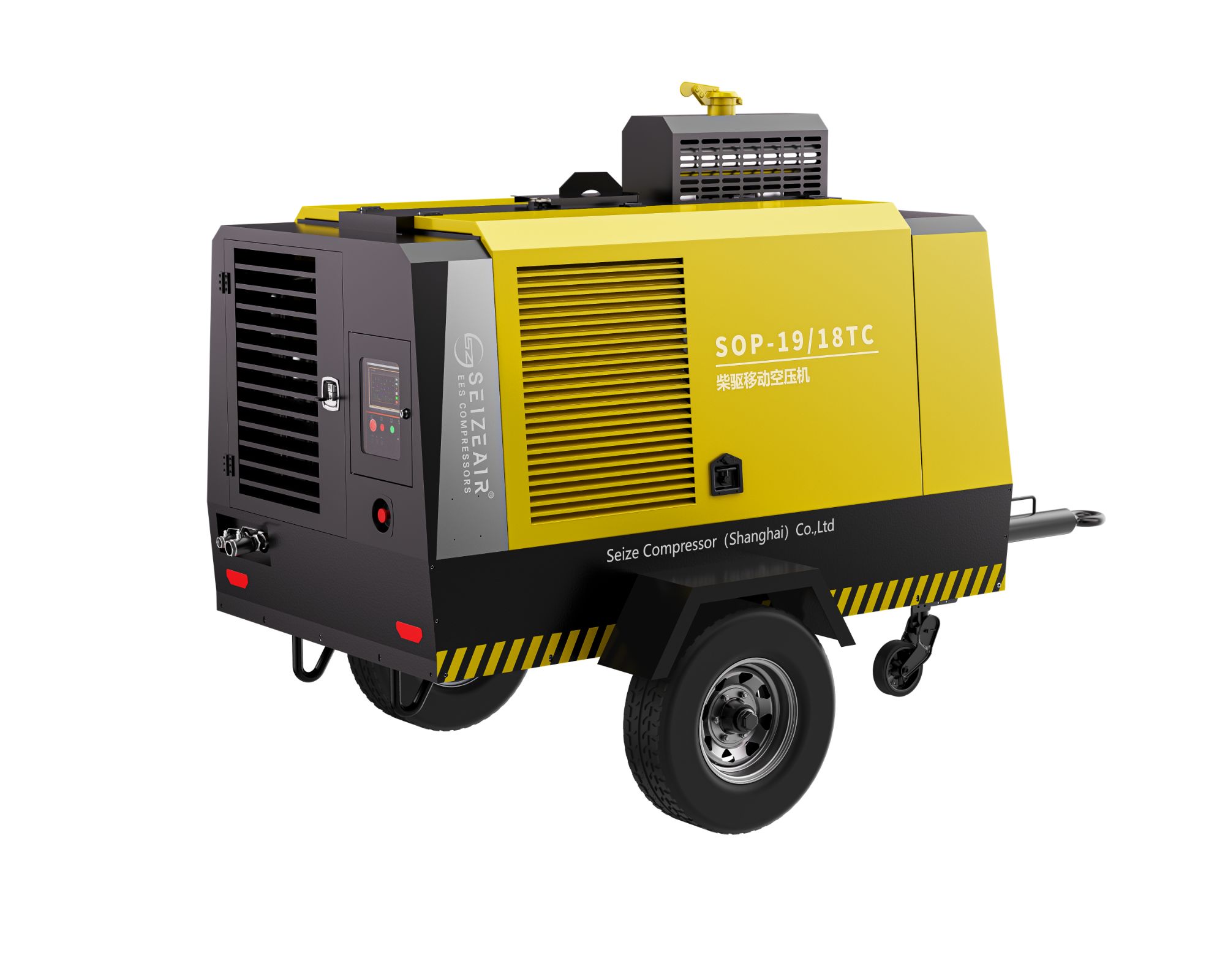
When you’re running tools or equipment far from a fixed air supply, a diesel portable air compressor becomes your lifeline. China has become a major source for these machines, but choosing the right one isn’t just about picking the highest CFM or lowest price. Real-world performance depends on details most buyers overlook—like engine quality, cooling systems, and how easy the unit is to move on rough terrain. At Seize Air, we see these differences daily. This guide cuts through the noise to highlight the key features and buying considerations that truly matter, so you can invest in a compressor that works as hard as you do.
How Diesel Power Changes What a Portable Air Compressor Can Do
A gasoline engine needs to spin fast to make real power, but a diesel builds massive torque right off idle. That changes how a portable air compressor behaves under load. Instead of revving up and screaming while the pump fights to reach working pressure, a diesel unit lugs down slightly and keeps pulling. The result is steadier airflow, less belt slip, and a machine that doesn't feel like it's about to shake itself apart on a long job.
Fuel burn tells an even bigger story. Diesel packs more energy per gallon, and a well-tuned compressor can run a full shift or more on a single tank. For road crews or remote site work where refueling means a 40-minute round trip, that's the difference between finishing before dark and babysitting a gas can. You also don't have to worry about a hot exhaust igniting spilled fuel, since diesel's flash point is far higher.
Then there's the mechanical side. No spark plugs, no carburetor, no ignition coils to fail in dust or rain. A diesel compressor is basically a cast-iron block, a fuel injector, and a pump. That simplicity pays off when the machine sits outside for months, gets pressure-washed, or runs in subzero temperatures. It's not that diesel makes a portable compressor louder or heavier for no reason; it trades those drawbacks for the ability to work harder, longer, and in places where a gasoline unit would simply give up.
Understanding Airflow and Pressure Ratings Without the Jargon
Most fan specifications read like a riddle, but airflow and pressure are just two sides of the same coin. Airflow tells you how much air gets moved, usually listed as cubic feet per minute or CFM. Think of it as the number of bucketfuls of air the fan can push into a room every minute. A bigger number means better ventilation for open spaces, but it only tells half the story.
Pressure is the fan's determination to keep pushing when something gets in the way. Air filters, long ducts, or tightly packed equipment create resistance. A fan with high pressure doesn't choke under that load; it keeps air moving. The garden hose analogy works well: airflow is the volume of water coming out, while pressure is how forcefully it sprays through a narrow nozzle.
Instead of chasing the biggest spec number, match the fan to the task. A simple window fan in an open room can lean heavily on airflow. An exhaust fan that has to drag air through a duct and filter needs solid pressure. Look for a balance that fits your actual setup, and you'll skip the confusion without needing an engineering degree.
Portability Features That Hold Up on Real Job Sites
Most portability claims fall apart the moment you actually have to move a machine across uneven ground, through a doorway, or up a flight of stairs. The tools that survive real job sites are the ones designed around the way crews actually work—not just the way they look in a brochure. That means wheels that don't clog with debris, handles that don't snap when someone grabs them with muddy gloves, and weight distributed so one person can manage a lift without throwing out their back by mid-morning.
On a hectic site, nobody has time to fiddle with folding mechanisms that require two hands and a manual. The best portability features are obvious at a glance: a single latch that releases with a boot tap, a collapsible frame that locks open with a satisfying click, and enough clearance to roll over extension cords instead of snagging them. Contractors will quickly abandon a "portable" tool that demands a cart or a second pair of hands every time it needs to shift ten feet.
Durability matters as much as ease of movement. A lightweight unit that cracks on the first drop from a tailgate isn't portable—it's disposable. The tools that earn a permanent spot on the truck are those with reinforced corners, protected control panels, and wheels rated for gravel, mud, and the occasional curb hop. When every minute counts, portability isn't a spec sheet number; it's whether the gear keeps up with the crew, not the other way around.
Fuel Efficiency and Operating Costs Over the Long Haul
When you run a fleet that logs hundreds of thousands of miles a year, the smallest difference in fuel burn per mile turns into a serious line item. Modern long-haul trucks are engineered to stretch every gallon, but real-world efficiency depends on more than the engine's rating. Aerodynamic tweaks, tire rolling resistance, and even how the driver manages speed on long grades all feed into the total cost of moving freight across the country. A truck that averages 7.5 miles per gallon instead of 6.8 can save over $8,000 annually per vehicle at current diesel prices—money that stays in your pocket without cutting corners on service.
Operating costs over hundreds of thousands of miles reveal which components truly hold up. Brake wear, clutch life, and transmission service intervals matter just as much as fuel economy when the odometer rolls past 400,000. Fleets that invest in predictive maintenance and low-viscosity lubricants see fewer unscheduled stops and lower per-mile expenses. For example, switching to synthetic driveline fluids reduces parasitic losses and extends drain intervals, saving both fuel and shop time. These choices compound: a one percent improvement in total operating efficiency can mean tens of thousands of dollars over the life of a single tractor.
The long haul is a test of engineering and discipline. Trucks that run coast-to-coast cycles through extreme temperature swings, heavy loads, and relentless highway speeds. Diesel particulate filters, EGR coolers, and turbochargers face the brunt of it. Smart operators track fuel use per trip and adjust routes to avoid congested corridors or steep climbs where possible. Others adopt automated manual transmissions that shift faster and more consistently than even skilled drivers, reducing clutch wear and fuel waste. Over five years and 600,000 miles, those small gains translate into a lower total cost of ownership and a healthier bottom line.
Durability and Maintenance: What to Inspect Before Buying
Before you commit to a purchase, spend time examining the materials and build quality. Check for signs of weak joints, rough edges, or cheap fasteners that will loosen over time. A well-made item should feel solid in your hands, with no flexing or creaking when you apply gentle pressure. Look closely at stitching, welds, or seams—these are often the first places wear appears.
Maintenance needs can quietly add up, so ask yourself how much effort you're willing to invest. Consider whether the surface is easy to clean, whether moving parts need regular lubrication, and if replacement components are readily available. Some finishes look great on day one but quickly show scratches, stains, or fading. If possible, read owner feedback specifically about long-term use rather than first impressions.
Finally, pay attention to how the item is stored or exposed to the elements. Even durable materials can fail early if they aren't suited to your environment—think humidity, direct sunlight, or temperature swings. Check whether protective covers, drainage holes, or rust-resistant coatings are included. A little inspection now can save you from replacing a weak product far sooner than expected.
Matching Compressor Specs to Your Most Common Applications
Don’t get hung up on max PSI—most common tools don’t need more than 90 PSI at the regulator. The number that actually matters is CFM at that pressure. A framing nailer only asks for short bursts of air, so a small 2-gallon compressor can keep up, but a DA sander or die grinder will run constantly and choke a machine that only puts out 3 CFM at 90 PSI. Figure out which tool you use most often, check its CFM requirement, add about 30% headroom, and treat that as your minimum.
Tank size and duty cycle work together, not separately. A pancake compressor with a 6-gallon tank is fine for filling bike tires or running a brad nailer on weekends—you’ll never push it hard enough to notice the short cycling. But in a daily-use shop where an impact wrench or blow gun gets hit every few minutes, that same tank will force the motor to refill constantly, which heats everything up and dumps more water into the lines. In that case, a 20-gallon or larger tank with at least a 50% duty cycle saves time and extends motor life.
Also think about where the compressor lives. If it has to roll between job sites, a 120V portable model with a folding handle beats a stationary 60-gallon unit that needs 240V. On the other hand, if you’re setting up a paint booth or running a blast cabinet, you want a two-stage pump, an aftercooler, and plenty of receiver volume—clean dry air matters more than raw pressure. Match the specs to how you’ll actually work, not to the loudest number on the box.
FAQ
Look beyond the CFM rating. A solid unit usually has an oversized oil cooler, a cast-iron pump rather than aluminum, a low-oil shutdown sensor, and a heavy-duty base frame that keeps vibration from cracking welds. Cheap copies often skimp on these details.
Match the tool's actual air demand, not just its average. A 90-pound jackhammer may need 60-80 CFM at 90 PSI with short peaks. Choose a compressor rated at least 20% above that peak, and make sure the diesel engine has enough torque reserve for sudden load changes.
They can be, if you pick a model from a manufacturer with a real export track record and local parts support. The main failures are usually hoses, gauges, and unloader valves, not the engine or air end. Keeping a spare maintenance kit solves most downtime.
This depends on where you operate. Many imported Chinese units are built to EPA Tier 4 or EU Stage V when specified, but not all are. Ask for the engine data plate and confirm the emission tier with the engine maker, because some resellers mislabel older engines.
For continuous tools like sandblasting or drilling, a rotary screw is usually better because it runs cooler and delivers steady air. Piston compressors are cheaper but wear faster under constant load. If you need only intermittent air for tire tools, a piston model can save money.
Open-frame diesel compressors often sit between 75 and 95 dBA at 7 meters. A canopy or sound-attenuated enclosure can bring that down to 65-75 dBA. Adding a residential-grade exhaust silencer helps, but it should not restrict the exhaust flow too much.
Change the engine oil and filter at 50 hours, then follow the manual—usually every 250 hours. Drain water from the air receiver daily, check belt tension, and clean the intake filter weekly if you are in dusty conditions. Ignoring the air filter is the quickest way to lose CFM.
Yes, both. Cold starts are harder, so look for a glow plug or intake heater and use winter-grade diesel. At altitude, the engine loses power and the compressor loses flow; you may need to derate the unit by about 3% per 1,000 feet above 3,000 feet.
Conclusion
A diesel portable air compressor from China isn't just another tool on the trailer—it changes what you can tackle away from a fixed power source. The diesel engine delivers consistent torque at lower RPMs, so you get usable air without the constant revving that wears out gas motors. When comparing models, ignore the marketing stickers and look at two numbers: CFM at a stated PSI. Many buyers get burned by a compressor that hits 90 PSI but only delivers half the airflow their impact wrench needs. You want the CFM rating matched to your highest-demand tool, not the peak PSI number on the tank. Portability also means more than a pair of wheels. Check the axle placement, lift points, and whether the frame can handle being dragged over gravel or hoisted onto a truck bed without twisting.
Fuel efficiency often gets overlooked until the first week of daily use. A well-tuned diesel unit can run noticeably longer on a tank than a similarly sized gasoline model, and diesel stores better on site. But before you buy, inspect the fuel filter location, drain points, and how easy it is to reach the oil dipstick—small design choices that make routine maintenance either a five-minute job or a headache. Operating costs aren't just about fuel; they include service intervals and parts availability. Match the compressor's output to your most common jobs, not the rare heavy-demand one. If you're mostly running nailers and small breakers, a mid-size diesel unit with a conservative duty cycle may outlive and outperform a larger machine that never gets worked hard enough to stay healthy.
Contact Us
Contact Person: Mia
Email: [email protected]
Tel/WhatsApp: +86 19821985894
Website: https://www.seize-air.com