

High Tenacity Recycled Polyester Filament Yarn Export: Key Insights for Global Buyers and Suppliers
2026-09-07
The export of high tenacity recycled polyester filament yarn is no longer a niche play—it’s a battleground where sustainability claims, tensile strength, and price volatility collide. Yet most buyers still stumble on the same hidden risks: inconsistent denier, weak supply chain resilience, and vague certifications. Before you lock in your next order, step inside the real trade mechanics that global importers rarely discuss. Drawing on field-level experience from Changshu Polyester, this guide cuts through the noise to reveal what actually drives quality, cost, and delivery reliability in today’s competitive export market.
Why Strength Retention Often Matters More Than Virgin Fiber Equivalence
When you dig into recycled paper specifications, virgin fiber equivalence gets a lot of attention, but it rarely tells you how the sheet will behave on a high-speed converting line or inside a corrugated box that gets stacked in a humid warehouse. Strength retention—measured as the percentage of burst, tensile, or ring crush that survives the recycling loop—captures what actually happens to fiber bonding after repeated drying and refining. A mill can hit a target basis weight and caliper with recycled furnish, yet if the fibers have lost their ability to re-bond, the finished product tears at the score lines or sags under load. That loss doesn't show up in a simple comparison to virgin benchmarks.
The reason retention matters more in practice is that recycled fibers aren't just shorter—they're fundamentally less predictable. Each time paper is repulped, the fiber walls stiffen, fines wash out, and the remaining material forms a more brittle network. Two bales of old corrugated containers from different collection streams might share the same average fiber length but perform very differently under stress. Focusing on strength retention forces a mill to look at the entire recycling system: pulper temperature, screening intensity, refining energy, and even the age of the recovered paper. Virgin fiber equivalence, by contrast, is a static target that ignores how the furnish degrades cycle after cycle.
For packaging engineers, the real question isn't whether a recycled board matches a virgin sheet in the lab—it's whether the box survives the supply chain. A 10% drop in burst strength after the third recycling loop might be acceptable for a lightweight e-commerce mailer but catastrophic for a heavy liquid bulk container. Strength retention data lets converters set performance windows that reflect real-world reuse, not just a one-time test. Without that focus, you end up with paper that looks fine on the spec sheet but fails where it counts: on the pallet, in the truck, and in the customer's hands.
Reading Between the Lines of a Recycled Yarn Spec Sheet
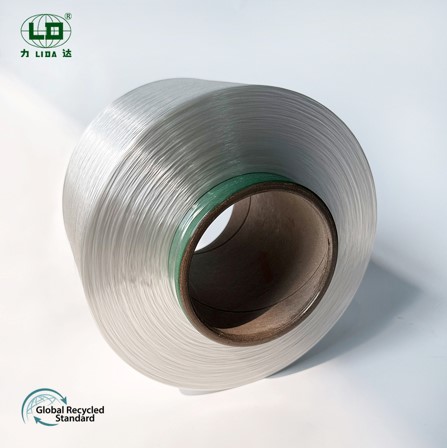
A recycled yarn spec sheet rarely tells the whole story. The numbers for fiber blend, twist, and tensile strength are useful, but they don't reveal how consistently those values hold across an entire dye lot or how the yarn behaves after repeated wash cycles. If you are comparing two options with nearly identical specs, ask for a physical sample and run a quick friction test—snap the yarn, rub it against itself, and see if it pills or sheds. Those small quirks often matter more in a finished garment than a marginally higher breaking strength.
Pay attention to the phrase "contains recycled fibers" versus a specific percentage. A claim of recycled content can mean 5% or 95%, and that gap changes everything from dye uptake to pilling resistance. Also look for notes on fiber source—post-consumer denim behaves differently from pre-consumer cotton waste, even if both are labeled as recycled. If the sheet is silent on this, assume the mill blended whatever was cheapest that month, which usually means more short-staple fiber and a weaker, fuzzier yarn.
The tolerance ranges listed for count and twist are another place to read carefully. A ±5% tolerance is standard, but if the spec says ±8% or more, expect visible thick-and-thin spots in your knitting or weaving. Mills that are confident in their sorting and spinning will tighten those ranges voluntarily. Instead of asking for "better quality," ask a supplier to show you their distribution curve for the last ten lots—that single graph tells you more than any marketing claim on the first page.
Hidden Logistics Costs That Eat Into Export Margins
Every shipment carries a stack of small fees that rarely show up on the initial quote. Port congestion charges, demurrage on containers held past the free window, and last-minute fuel surcharges from carriers can quietly add 8–12% to the landed cost. Many exporters only notice these when reconciling invoices against the original pro forma, by which point the margin has already thinned.
Documentation errors are another silent drain. A single typo in the bill of lading or a missed customs code update can hold cargo at the border for days, triggering storage fees and re-inspection costs. Meanwhile, inland trucking often gets quoted without factoring in waiting time at the dock, empty returns, or chassis shortages. These are not one-off surprises; they repeat across every route and every season.
Packaging decisions also play an underrated role. Overweight pallets push shipments into a higher freight bracket, while under-protected goods lead to damage claims and return freight. Smart exporters track these line items separately, not as part of a general logistics budget, because only then can they see which trade lanes actually make money after all hidden costs settle.
Certifications That Actually Sway EU and North American Importers
For EU importers, nothing opens doors faster than the right mark. CE is often treated as the floor, not a differentiator. What actually tilts a sourcing decision is the combination of REACH and RoHS compliance, because those show you have already done the chemical and restricted-substance homework that buyers dread auditing. A supplier who can hand over a current REACH declaration and a RoHS test report on request saves an importer days of back-and-forth with a lab.
In North America, UL listing carries serious weight for electrical and electronic goods, while FDA registration is non-negotiable for anything destined for food contact or certain medical-adjacent uses. But the certifications that shift decisions are the ones tied to liability and recall risk: FCC for devices with any radio function, ASTM F963 for toys, and a clean approach to California Proposition 65 warnings. Importers are less impressed by a wall of logos and more by documentation that survives a retailer’s compliance audit.
Beyond the legal floor, voluntary standards like GOTS for textiles or B Corp status do not just decorate a website. They pre-answer the questions procurement teams would otherwise spend weeks chasing through email. When two suppliers look similar on price and lead time, the one whose certification stack maps directly onto the buyer’s existing vendor checklist usually wins the contract.
How to Vet a Recycled Filament Supplier Without a Factory Visit
Start by asking for batch-level data, not just a sample spool. A supplier serious about quality will track melt flow index, diameter tolerance, and contamination levels for every production run. If they can't send you a recent test report with lot numbers and timestamps, that tells you more than any glossy brochure.
Next, probe how they source their plastic. Legitimate recyclers can name the industrial streams, post-consumer collection networks, or specific manufacturers they buy scrap from. Watch for vague phrases like 'mixed sources' or 'post-industrial material' without details. A good follow-up question is how they separate PETG from PLA or filter out metal and paper. Their answer should be concrete, not hand-wavy.
Finally, request a small trial order and put it through your own tests. Measure diameter with a micrometer at several points along the spool, check for brittleness after printing, and look for color shifts or specks that indicate contamination. Compare the results against the spec sheet they gave you. If the numbers drift outside their claimed tolerance, you've learned what a factory visit might not even reveal.
What rPET Feedstock Prices Tell You Before You Sign the Contract
Before you sign, look past the headline number. The gap between clear PET bale prices and mixed-color bale prices is often a sharper indicator of collection quality than any spec sheet. When clear bales start commanding an unusual premium, it usually means bottle-to-bottle demand is tightening, while mixed-color bales may be piling up with no fiber buyer willing to take them. That imbalance works its way into flake yield and contamination rates, so a low flake quote tied to a cheap mixed-color feedstock could leave you with downgauged material or costly sorting at your plant.
The relationship between bale costs and flake quotes over a six-to-eight-week window tells you how much margin your supplier is trying to protect. If bale prices fall but flake quotes barely move, the processor is likely sitting on higher-cost inventory and will resist downward adjustments during the contract. If flake prices drop faster than bales, they are clearing capacity and may accept shorter terms or lower minimum commitments. Either way, you need that historical spread in writing before locking a formula.
Regional feedstock dynamics often matter more than the national average. Imported rPET may look cheaper per pound, but contaminated loads, port delays, and extra washing requirements can erase that advantage by the second shipment. A quote that stays flat for weeks while bale indexes swing wildly should make you ask for the supplier’s last three months of purchase records. If they won’t share them, the price you are about to sign is built on assumptions, not on the actual material moving through their yard.
FAQ
It combines the strength needed for load-bearing applications with a lower environmental footprint. Brands are increasingly required to meet recycled content targets, and this yarn allows them to do so without sacrificing tensile performance. The result is stronger interest from automotive, geotextile, and safety netting sectors.
Western Europe leads due to strict circular economy mandates, followed by North America where brand commitments to recycled materials are strong. Southeast Asia is also emerging as a processing hub, importing yarn for conversion into finished goods destined for western markets.
Global Recycled Standard (GRS) is almost mandatory, often alongside OEKO-TEX Standard 100 for chemical safety. Some buyers also ask for ISO 9001 for quality management and REACH compliance for EU shipments. Missing GRS can shut you out of most European tenders.
Finer deniers with higher filament counts usually command premium prices because they require more precise spinning and draw ratios. High tenacity versions with tenacity above 6.5 cN/dtex push pricing higher still, especially in low-shrinkage grades used for sewing threads and coated fabrics.
Moisture absorption is a minor issue, but the real challenge is container space utilization. Yarn on cones or beams can be bulky, and buyers in different regions prefer different package formats—some want dye tubes, others want warp beams. Misjudging packaging can lead to freight cost overruns or damage claims.
A transparent chain of custody is essential. Suppliers should maintain batch-level records from post-consumer bottle collection through polymerization and spinning. Providing a transaction certificate from a GRS-accredited certifier for each shipment is the most credible way to avoid disputes.
Inconsistent tenacity between batches and poor unwinding performance are top complaints. Buyers also cite shade variation in dope-dyed recycled yarns. Regular quality audits and investing in tension control during winding can prevent most of these issues.
Conclusion
For buyers comparing high tenacity recycled polyester filament yarn, chasing 'virgin equivalent' claims can be misleading. What actually keeps a product viable under load is strength retention after repeated stress and exposure—many recycled lots lose more tenacity than expected once abrasion and moisture cycles begin. A careful read of the spec sheet reveals this: look beyond the headline cN/dtex. Check for elongation at break, dry-heat shrinkage, and the number of tested bobbins. Hidden logistics costs also lurk where specs stay silent. Dense, high-tenacity yarns require different palletizing, and rerouting around port congestion or switching from FCL to LCL can quietly erase the margin you thought you had. Ask for incoterms clarity and actual freight quotes per container size before locking pricing.
When selling into the EU or North America, certifications carry more weight than marketing language. GRS and Oeko-Tex Standard 100 are baseline, but importers increasingly check for RCS traceability and specific chemical compliance under REACH or ZDHC. Without a factory visit, you can still vet a supplier by requesting third-party batch test reports, video walkthroughs of the melt filtration and spinning line, and references from buyers who handle similar denier ranges. rPET feedstock pricing offers another early signal: if clean flake or food-grade pellet costs are climbing, the yarn quote should reflect that within weeks—not months. A supplier who holds a price too long may be blending virgin chips or off-spec material. Tie the contract to feedstock index movements and set a tolerance for tenacity variation; that protects both sides before the first container ships.
Contact Us
Contact Person: CONNIE
Email: [email protected]
Tel/WhatsApp: 86-0512-53671634
Website: https://www.lida-yarn.com/