
ODM Butterfly Valve Company Advantages for Custom Industrial Valve Solutions
2026-09-16
When standard valves fall short, custom engineering becomes the only path forward. For industrial operations demanding precise flow control, ZMV has built its reputation as an ODM butterfly valve partner that doesn't just adapt designs—it rethinks them from the ground up. This article breaks down the company's core advantages in delivering tailored valve solutions, from material selection to actuation integration.
Built Around Your Piping, Not the Other Way Around
Most equipment on the market expects you to rework your entire piping layout just to make it fit. That means extra cuts, new elbows, and hours of labor before the actual installation even starts. This unit takes the opposite approach: it starts with your existing pipe runs and adapts around them, so the footprint follows the space you already have instead of forcing the space to follow the equipment.
The connection points are positioned with real-world field conditions in mind. You can rotate the inlet and outlet independently, offset the centerline, or use the included adapter rings to match slightly different pipe diameters without welding in a reducer. That flexibility removes the usual back-and-forth between the spec sheet and the jobsite, because the unit already accounts for the messy, imperfect realities of existing systems.
Over time, this design choice pays off beyond the first install. When a component needs service, you can unbolt it in place without cutting into the surrounding pipe. The fittings and seals are arranged so that access stays clear from the front, even in tight mechanical rooms. That means future maintenance doesn't turn into another piping redesign project.
When Off-the-Shelf Valves Can't Handle the Media
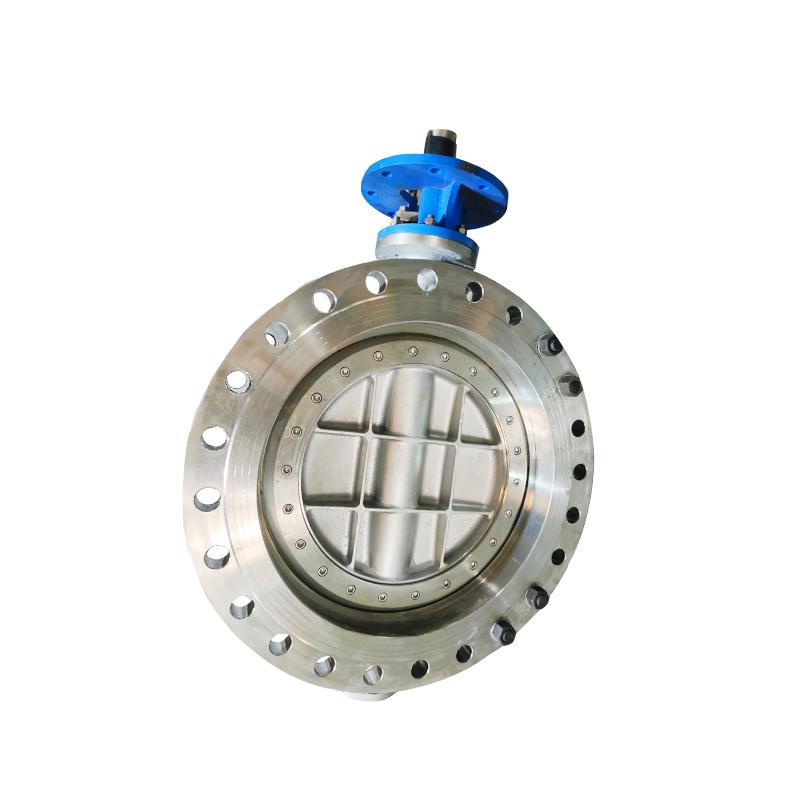
Standard valve catalogs assume a predictable fluid: clean water, light oils, or inert gases. But many industrial processes push far beyond those assumptions, circulating abrasive slurries, sticky polymers, or acids that attack common alloys. In these cases, a generic stainless-steel or brass valve may fail within weeks—seats erode, stems seize, and body walls thin until leakage becomes unavoidable. The real cost isn't just the replacement part; it's the unplanned shutdown, lost batch, or safety incident that follows.
Media compatibility goes deeper than choosing a corrosion-resistant material. A slurry with high solids content can wedge between the ball and seat, scoring surfaces and causing the valve to stick. High-viscosity fluids demand larger ports and smoother internal contours to prevent clogging. Even subtle factors like flow velocity, temperature swings, or trace contaminants can turn a seemingly suitable valve into a maintenance headache. Off-the-shelf units rarely account for these combined stresses because they're designed for broad appeal, not specific operating extremes.
When standard options fall short, the path forward often involves tailored trim materials, specialized coatings, or entirely different closure mechanisms. For example, a ceramic-lined plug valve may outlast a metal-seated ball valve by a factor of ten in abrasive service. A full-bore diaphragm valve with PTFE lining can handle aggressive acids without dead zones that trap solids. The key is matching the exact failure mode to a design that mitigates it—not just picking a more expensive alloy and hoping for the best.
Tolerances That Keep Fugitive Emissions in Check
In valve design, the smallest machining variation can turn a tight seal into a slow leak. For fugitive emissions control, tolerances on stem-to-bonnet clearances and gland follower concentricity are not just blueprint suggestions—they dictate whether volatile organic compounds stay inside the process line or escape into the atmosphere. A stem that runs slightly off-center wears packing unevenly, creating a pathway for gas after only a few hundred cycles. That’s why high-performance valve manufacturers hold radial runout on stems to within a few thousandths of an inch, and inspect every finished surface for microscopic scoring that could act as a leak channel.
Equally critical are the tolerances on packing gland dimensions and dynamic seal contact areas. If the gland bore is oversized relative to the stem, even by a hair, the packing cannot maintain consistent radial load—especially under thermal cycling. Engineers often specify a maximum diametrical clearance of 0.005 inches for graphite-based packing systems in EPA Method 21 compliant valves. This tight window ensures the packing remains compressed enough to seal, yet not so tight that stem friction causes galling or excessive actuator torque. Such fine control separates a valve that meets a fugitive emission standard from one that merely passes a single lab test.
Finally, the bonnet-to-body joint tolerance plays a silent but decisive role. A minute mismatch in flatness or bolt hole alignment can create uneven gasket loading, leading to micro-leaks that worsen with pressure fluctuations. Leading plants now use coordinate measuring machines to verify that mating surfaces are flat within 0.001 inches per inch of diameter. Combined with controlled surface finish on gasket seating areas, these exacting tolerances transform a standard bolted connection into a reliable, long-term emissions barrier—no re-torquing needed after startup.
From Napkin Sketch to Finished Casting in Weeks
The journey from a rough idea scribbled on a napkin to a precise, high-quality metal casting used to take months—but those days are behind us. By combining rapid digital pattern generation with automated molding and finishing processes, we compress the entire development cycle into a matter of weeks. You send us your sketch, and we translate it into a working 3D model within days, handling geometry validation, material selection, and toolpath creation before the first pour.
Gone are the tedious back-and-forth revisions and long waits for pattern tooling. Our foundry uses additive-manufactured patterns and 3D-printed cores that hold tolerances as tight as ±0.005 inches per inch, meaning your prototype comes out as close to the final production part as physics allows. Because we cast in small batches, you can test multiple design iterations in parallel without locking yourself into expensive tooling changes. One client recently turned a hand-drawn bracket sketch into a machined, heat-treated aluminum casting ready for field testing in just 19 days.
The real advantage isn't speed alone—it's the freedom to fail fast and refine without penalty. Short lead times let you order a handful of castings, stress-test them, adjust wall thicknesses or radii in a morning meeting, and have the revised parts back in your hands before the next design review. That kind of turnaround changes the entire engineering conversation, moving from theoretical simulations to empirical iteration with real metal in your hands.
Small-Batch Production Without Sacrificing Consistency
When you commit to small-batch production, the margin for error shrinks dramatically. Every run becomes a chance to check the little things that large factories ignore: the exact temperature of a mixing vessel, the tension on a filling nozzle, the subtle shift in raw material texture from one delivery to the next. We handle each batch as its own project, adjusting on the fly but always against a locked reference sample. That reference, not a generic spec sheet, is what keeps the output consistent.
Consistency doesn't come from rigid repetition; it comes from knowing which variables actually move the needle. We record every parameter—timing, pressure, ambient humidity—and cross-check them before releasing anything. When something drifts even slightly, we stop and correct it instead of letting the batch slide through. The result is a series of small batches that behave like one continuous production line, without the cold uniformity that erases character.
Customers often expect handcrafted work to vary from order to order. Ours doesn't, because we treat consistency as a craft in itself. The same shade, the same viscosity, the same finish—whether you order ten units or a thousand. That reliability is what lets small-batch clients compete with mass producers, and it's built on habits, not hope.
Direct Access to the Engineers Who Design Your Valve
When you call our support line, you won't wade through layers of generic troubleshooting scripts. Instead, you'll speak directly with the engineers who actually designed your valve. They know every material choice, every tolerance, and every possible failure mode because they were the ones making those decisions at the drawing board.
This direct line isn't a marketing gimmick. It's how we've always operated. If a valve isn't performing as expected in your application, the person on the other end of the phone can often diagnose the issue from memory, pull up the original CAD files, and suggest a fix that works with your system's constraints—not against them.
For complex projects, you can even schedule a working session with the design team. We've had customers share real-time process data while our engineers tweak orifice sizing or spring rates on the spot. No middlemen, no lost details, just the people who built the thing helping you make it work better.
FAQ
We start with the application, not the valve. Flow media, pressure spikes, actuation type, and even the flange drilling pattern are used to build the valve around your system, so you are not forced to adapt your piping to an off-the-shelf design.
Yes. We regularly produce butterfly valves from DN40 up to DN3000 with wafer, lug, double-flanged, or custom-machined end connections. If you can send a dimensional sketch, our engineering team can usually confirm feasibility within two working days.
Depending on the service, we offer ductile iron, carbon steel, stainless steel, duplex, and super duplex bodies, paired with EPDM, NBR, Viton, PTFE, or metal-seated discs. We can also supply special coatings such as Halar or nickel plating for aggressive chemical lines.
Each design is checked with finite element analysis and then pressure-tested according to API 598 or EN 12266-1. For critical orders, we can add helium leak testing, cryogenic cycling, or high-cycle endurance testing before shipment.
The most useful details are line size, pressure class, media type, temperature range, actuation method, and any special standards you must meet. If you only have partial information, our engineers can recommend sensible defaults and flag what needs confirmation later.
Absolutely. We mount and calibrate electric, pneumatic, or hydraulic actuators in-house, including limit switches, positioners, and bus communication modules. This way the valve arrives as a single tested assembly rather than a kit of parts.
For standard material combinations with minor modifications, we usually ship in 3-5 weeks. Fully bespoke designs or exotic alloys may take 8-12 weeks, but we provide a firm schedule after drawing approval and keep you updated at each milestone.
Yes. We can supply replacement seats, discs, stems, and actuator spares from stock for most series. If your process changes, we also offer re-rating evaluations and retrofit kits to adapt the existing valve body without replacing the whole unit.
Conclusion
Standard butterfly valves often force you to redesign piping around their fixed dimensions and material limits. We reverse that logic. Our ODM approach starts with your existing layout, pressure drops, and connection types, then builds the valve body, disc, and seat around them. This means no awkward spacers, no unnecessary flanges, and no compromise on flow characteristics. When the media is abrasive slurry, hot acids, or sticky polymers, off-the-shelf castings fail quickly. We select alloys, coatings, and elastomers that match the exact chemistry and temperature cycling of your process. Tight machining tolerances on the stem and seat pocket keep fugitive emissions below your permit thresholds, even after thousands of cycles.
Speed matters when a production line is down. We take a napkin sketch or a marked-up general arrangement drawing and move it into pattern making and casting within days, not months. Small-batch runs of five or fifty valves are produced with the same jigs, fixtures, and inspection records as our higher-volume work, so part-to-part consistency holds. Throughout the project you talk directly with the engineers who design the valve, not a sales layer. That short feedback loop catches interference issues early and lets you adjust facing dimensions, seat materials, or actuator mounting without waiting for a formal change order. The result is a valve that truly fits your system, your media, and your maintenance schedule.
Contact Us
Contact Person: Lucas Lin
Email: [email protected]
Tel/WhatsApp: +8613968913000 / +8613868610141
Website: https://www.zhengmaogroup.com