
PVDF PPGI Maker: How to Choose a Reliable Manufacturer for Long-Lasting Coatings
2026-09-30
A coating failure on a high-rise isn't just an eyesore—it's a budget line you'll regret for years. That's why the PVDF PPGI maker you pick matters more than the spec sheet alone. With suppliers claiming the same 20-year warranties, how do you know who actually delivers long-lasting color and gloss? At LANYUN, we've seen the difference that raw material traceability and real weathering data make—and this guide breaks down exactly what to look for before you commit.
Ask for Real Weathering Data Instead of Only Lab Reports
Lab reports have their place, but they rarely capture what happens after a material spends five years on a rooftop in a coastal city. Accelerated weathering tests can simulate UV exposure and salt spray, yet they compress time in ways that miss the messy interplay of thermal cycling, pollution, and micro-abrasion. If you're specifying for a project with real stakes, ask suppliers for case studies or field performance data from similar climates. It's not about dismissing the lab work—it's about demanding evidence that the product has already survived the conditions you're designing for.
Too often, procurement teams accept a stack of standardized test certificates and call it due diligence. But a xenon-arc chamber doesn't tell you how a coating will chalk after three winters of freeze-thaw cycles next to a highway. Push for installation references you can actually visit, or ask for long-term exposure panels that have been monitored over years. A supplier who hesitates to share real-world weathering records may simply not have them—and that's a risk you need to price in before signing off.
The best manufacturers don't hide behind lab-only data. They maintain outdoor weathering sites, collect failure data from clients, and can show you side-by-side comparisons between accelerated results and actual field degradation. When you ask for that information, you're not being difficult—you're separating products that merely pass a test from those that genuinely endure. Real weathering data is messy, incomplete, and sometimes inconvenient, but it's the closest you'll get to knowing how a material will perform over the life of your building.
Verify the Resin System Uses Kynar 500 or Hylar 5000
Resin quality often goes unnoticed until the finish starts to fail. When evaluating a coating system for architectural metal, the specific fluoropolymer matters more than the generic term “PVDF.” Ask for documentation that names the resin by its manufacturer designation—Kynar 500 or Hylar 5000—rather than accepting a vague “high-performance” claim. The resin is the backbone of the coating, and only these two carry the decades of field data that make the difference between a five-year and a thirty-year finish.
Many suppliers offer lower-cost PVDF blends that dilute the resin content. A simple way to verify is to request the coating batch certificate, which should list the raw resin source and percentage. If the certificate omits the brand or switches to a generic “PVDF copolymer,” treat that as a red flag. The same goes for formulations that substitute acrylic or polyester modifiers beyond the typical 30% limit—these compromises show up later as chalk, fade, or loss of gloss.
Finally, check the project specification against the applicator’s invoice. Some applicators will quote a Kynar 500 system but then run a lower-cost alternative unless the spec is enforced. A field audit can be as straightforward as reading the drum label on site before spraying. If the label doesn’t say Kynar 500 or Hylar 5000, it isn’t the resin system you specified.
Walk the Production Line to Inspect Pretreatment and Curing
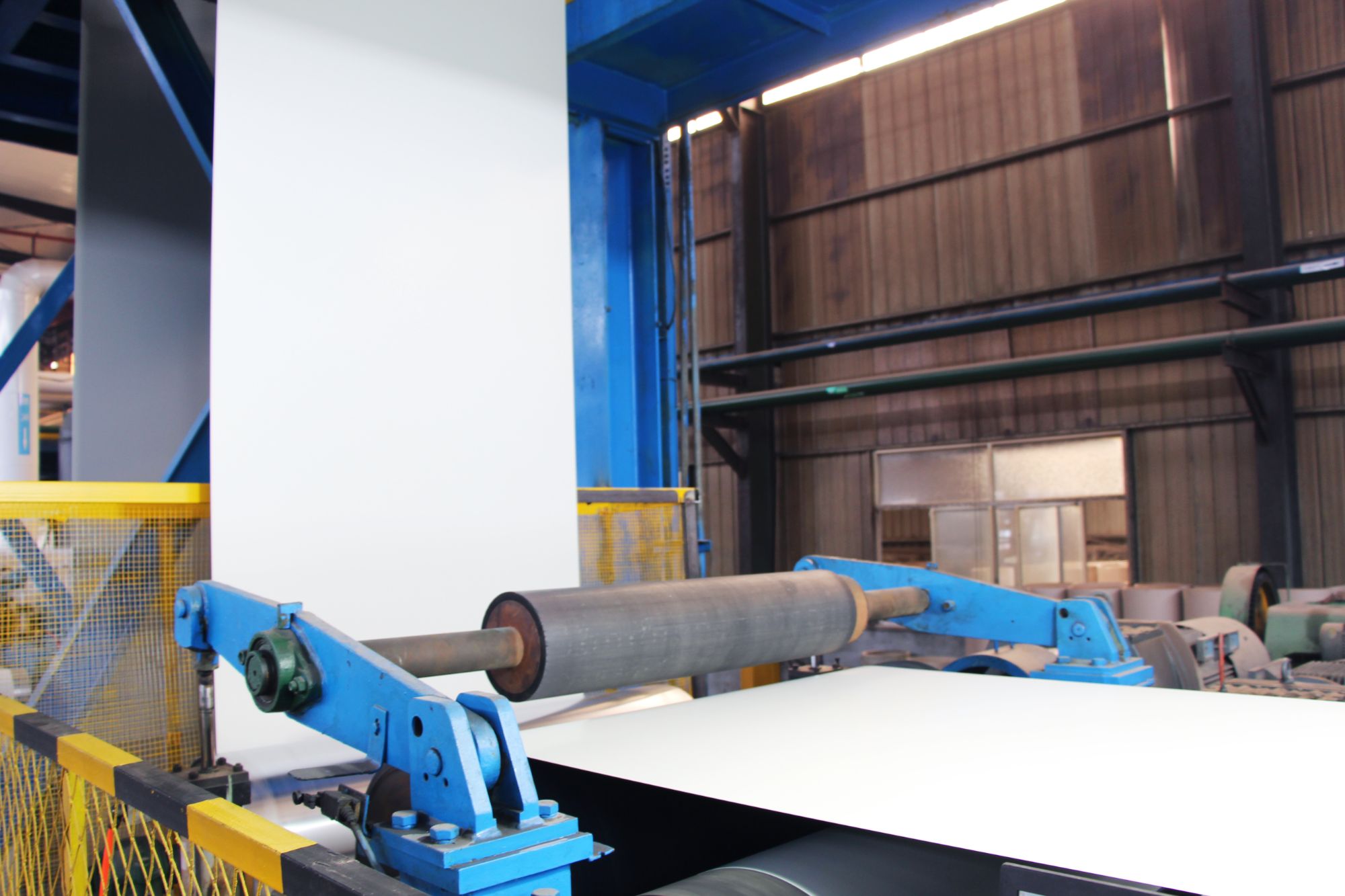
The walk begins at the pretreatment stage, where raw metal surfaces must be stripped of oils, scale, and mill residue before coating. Rather than relying on a checklist, place a gloved hand on a few parts after the rinse cycle—you should feel a slight drag, not a slick film. If the water breaks or beads unevenly, the chemical bath is losing its bite. Check the tank temperature and concentration log against the actual readings; operators sometimes trust the gauges more than the chemistry. Look for rust blooms near welds or crevices, as these spots often escape the spray pattern and will haunt the powder adhesion later.
Moving to the curing oven, don't just read the controller display. Open the access panel during a cycle and feel the heat roll out—your skin will tell you if the airflow is steady or dead in certain zones. Use an infrared thermometer on parts coming off the line, not just the oven walls. The powder should have a uniform gloss and a hard, glassy tap. If you catch a whiff of solvent or see a faint haze on dark colors, the cure is incomplete. Ask the line worker how often they swap out the burner filters; a clogged filter can drop the peak temperature by thirty degrees while the display still shows a perfect curve.
Finally, stand back and watch the rhythm for ten minutes. A line that's running too fast will stack parts too closely, robbing the pretreatment of drain time and the oven of heat soak. Too slow, and the powder starts to sag or overbake into a brittle shell. Don't rely on the shift report—count the hangers yourself and time a full cycle. If you see operators manually touching up the same spots every day, that's a signal the process is compensating for a failure upstream. The line should smell clean and hot, not sour or acrid. Trust your senses more than the dashboard, and the hidden problems will surface before the next batch ships.
Read the Warranty Like a Contract Rather Than a Brochure
A warranty document rarely reads like the glossy brochure that convinced you to buy. It is a binding agreement with precise definitions, time limits, and clauses that determine what the manufacturer must actually do if something goes wrong. Approaching it with the same skepticism you would bring to a lease or service contract keeps you from being surprised later.
Pay attention to the exclusions and the words that qualify coverage. Terms like "normal wear and tear," "authorized service provider," and "proof of purchase" are not filler; they set the boundaries of your rights. If a repair requires parts that are no longer manufactured, or if you missed a registration deadline buried in fine print, the warranty may already be void.
Before you file a claim, underline every obligation placed on you as the owner. Some warranties demand specific maintenance records or forbid third-party repairs. Reading the document as a contract means checking whether the promised protection matches the sales pitch, and keeping copies of everything you submit.
Track Down Five-Year-Old Projects to See Real Performance
Most teams only look at recent wins, but real insight hides in what you built five years ago. That's enough time for hype to fade, for churn to settle, and for maintenance costs to surface. Go back through your old project logs and pull up the ones that seemed promising back then. Check whether they still run, whether anyone still uses them, and what it costs to keep them alive.
Don't just glance at the code—look at the actual outcomes. Did that internal tool actually save time, or did people quietly abandon it after two months? Did that feature bring in the revenue the roadmap promised? Pull the usage data, talk to the people who were around then, and note where reality diverged from the original pitch. Those gaps tell you more than any quarterly report.
The point isn't to blame anyone for old decisions. It's to train your judgment. When you see which bets paid off and which slowly decayed, you start to recognize patterns that no amount of upfront planning can reveal. That makes your next five-year outlook a lot less guesswork and a lot more grounded in evidence.
Confirm Dedicated Coating Lines to Avoid Cross-Contamination
When a facility handles multiple coating formulations, even trace residue from a previous run can compromise adhesion, color stability, or chemical resistance. Dedicated lines eliminate this risk by keeping incompatible chemistries physically separated. Rather than relying solely on cleanup protocols, the equipment itself becomes the first barrier against unintended mixing.
Operators often discover that shared lines require frequent purging and solvent flushing, which drives up downtime and waste disposal costs. Assigning a dedicated coating line for high-purity or sensitive products sidesteps these recurring expenses. The upfront investment in separate piping, spray booths, or curing ovens pays back through fewer rejected batches and less rework.
Cross-contamination rarely announces itself until a finished part fails in the field. By confirming dedicated lines during process planning, engineers lock in a cleaner production flow from day one. Audits also become simpler, since the physical segregation of coating systems provides clear evidence of contamination control without relying on operator judgment alone.
FAQ
Ask for batch-level quality records and third-party test reports from the past three years, not just a glossy brochure. A maker with nothing to hide will happily share details on resin suppliers, coating thickness variance, and adhesion test results. If you only get marketing claims without supporting data, that is a clear warning sign.
Request accelerated weathering data such as QUV or xenon arc testing, but do not stop there. See if the manufacturer has real-world exposure samples from coastal, industrial, or high-UV locations similar to your project site. Comparing lab numbers with field evidence gives you a much more realistic picture of service life.
Not necessarily. A well-cured 25-micron coating with uniform coverage often outperforms a poorly applied 35-micron layer. Focus on coating uniformity, primer compatibility, and proper oven temperature control rather than thickness alone, because uneven film build creates weak spots that fail early.
The primer is the silent workhorse. It locks the topcoat to the metal substrate and blocks moisture from reaching the zinc layer. Look for epoxy or polyurethane primers designed for PVDF systems, and ask how the manufacturer ensures consistent primer thickness on both flat areas and edges, since edge corrosion is where many cheap products fail first.
The cleanest coating system fails quickly if the steel surface is not properly pretreated. Check that the line includes degreasing, rinsing, and a conversion coating step like chromate or chrome-free passivation. Also confirm the zinc coating weight on the galvanized substrate, because thinner zinc can undermine the entire system even when the PVDF topcoat looks perfect.
Ask for spectrophotometer readings from recent runs and compare the Delta E values against the agreed standard. A reliable manufacturer will keep variation tight, usually below one Delta E unit, and will provide physical color chips from each batch. If the supplier cannot explain how they control pigment dispersion and curing temperature, expect visible differences once the panels are installed side by side.
Prices that seem too good to be true, refusal to share detailed quality documentation, and a lack of traceability from raw material lots to finished coils are all serious warnings. Be especially cautious of makers who only show sample panels but cannot show you the actual production line or recent customer projects. Long-lasting coatings come from consistent processes, not lucky batches.
Conclusion
Selecting a PVDF PPGI manufacturer demands more than comparing price sheets or glossy brochures. Start by requesting real weathering data from actual installations rather than relying solely on accelerated lab reports, since only years of field exposure can confirm how a coating holds up to UV, humidity, and industrial fallout. Next, verify that the resin system truly uses Kynar 500 or Hylar 5000—these 70% PVDF resins are the benchmark for long-term color and gloss retention, and substitutions with lower fluoropolymer content often fail within a decade. A plant visit is also essential: walk the production line to inspect pretreatment baths and curing ovens. Inadequate cleaning, thin conversion coatings, or under-cured topcoats create weak points where corrosion starts, no matter how good the resin looks on paper.
Equally important is reading the warranty like a binding contract rather than a marketing page. Check whether it covers fading, chalking, adhesion loss, and film integrity for at least 20 years in your specific climate, and note which exclusions apply. Ask the manufacturer for references to five-year-old projects—preferably in regions with similar sun, rain, and temperature swings—so you can see real performance instead of hearing promises. Finally, confirm that the plant runs dedicated coating lines for PVDF. Shared lines introduce cross-contamination from polyester, epoxy, or silicone-modified coatings, which can weaken the fluoropolymer layer and compromise adhesion. These checks may seem demanding, but they separate manufacturers who genuinely understand long-lasting PVDF coatings from those who simply sell the label.
Contact Us
Contact Person: Nia
Email: [email protected]
Tel/WhatsApp: +86 18954360337
Website: https://www.sdppgi.com