

Top Hot-Dip Galvanized Angle Steel Factory: What Sets the Best Apart
2026-10-01
Choosing a factory for hot-dip galvanized angle steel often feels like a gamble—coating thickness varies, zinc adhesion fails early, and hidden corrosion eats away at your project. The best suppliers don’t leave these outcomes to chance. From rigorous pre-treatment to uniform zinc layers and post-galvanizing inspection, a handful of details separate reliable steel from costly rework. At Shunchen steel, those details are treated as non-negotiable. Here’s a closer look at what actually makes a top hot-dip galvanized angle steel factory stand out.
The Zinc Layer That Actually Sticks Around
Plenty of zinc coatings look fine on day one, then start peeling away the moment the metal flexes or meets a scratch. The difference here comes down to how the layer is bonded. Instead of sitting on the surface like paint, this zinc forms a tight metallurgical grip that follows the base steel's contours. That means no hidden air pockets, no thin edges just waiting to lift, and no dramatic flaking after a few temperature swings.
What makes it hold is the way the coating grows into the steel rather than simply covering it. The reaction zone between zinc and iron creates a graded transition, so there is no sharp line where two different materials meet. Stress gets distributed instead of concentrated at a boundary, which is why this layer survives bending, impacts, and years of outdoor exposure without losing its protective job.
You can see the practical result in places where other coatings fail early: cut edges, bolted joints, and areas rubbed by vibration. Those are the spots where a weak bond shows itself first. Here, the zinc stays put because it is not just attached; it is part of the metal's outer skin.
Why Cheap Angle Steel Costs More After One Winter
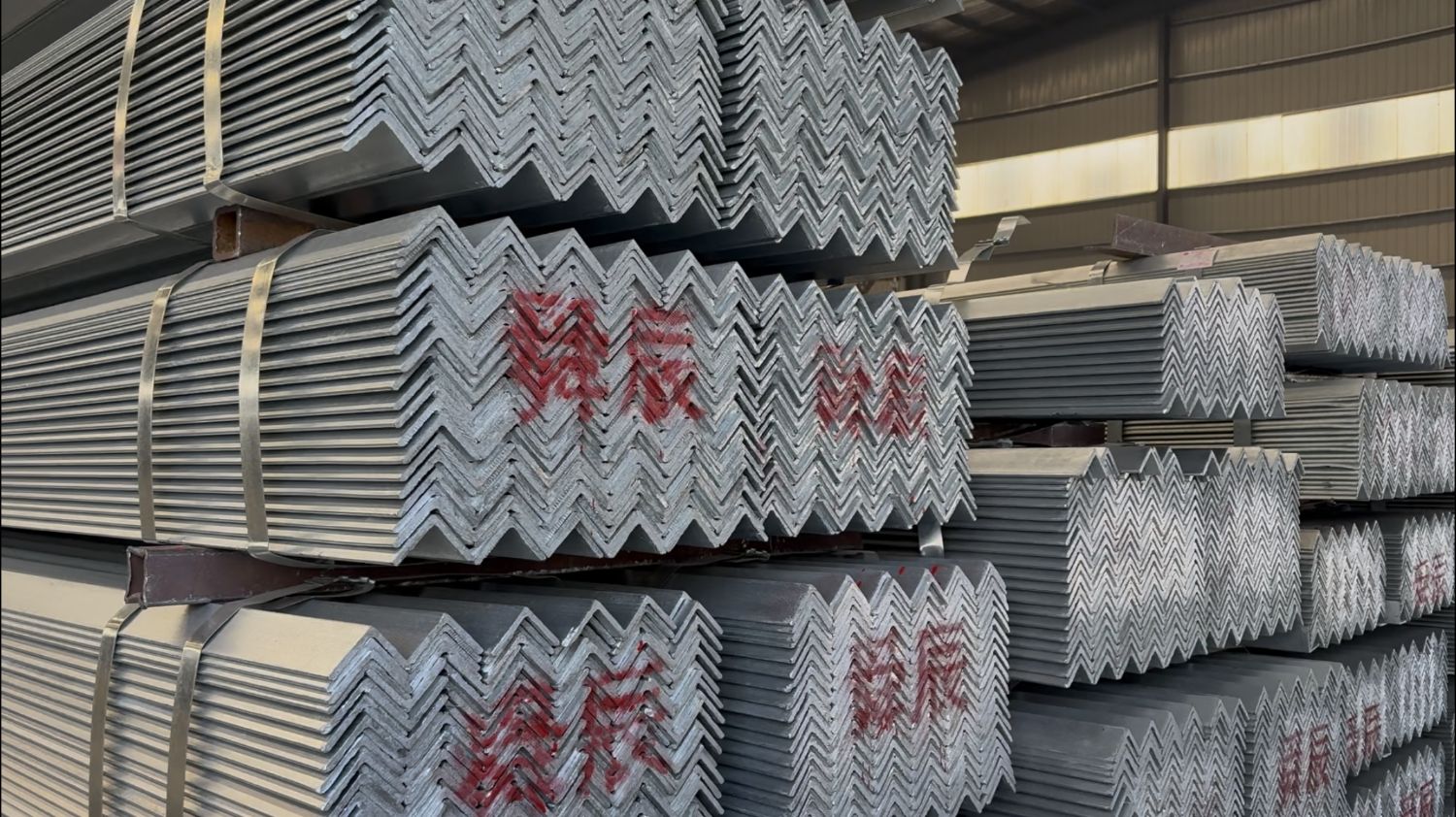
The first snow hasn't even melted before the bargain angle steel starts showing its true colors. Thin zinc coatings wear off under freeze-thaw cycles, exposing raw edges to road salt and moisture. Within weeks, orange rust blooms along the cut ends and bolt holes. What looked like a savings at the supply yard now demands a grinder, rust converter, and two weekends of labor just to keep the structure safe.
Come spring, the real bill arrives. The cheap steel's thinner flanges have deflected under snow load, throwing door frames out of square and cracking the concrete anchors. You discover the mill cert was vague about yield strength, and the material's actual performance falls short when temperatures drop below -10°C. A professional welder refuses to touch the corroded sections without first cutting back a foot of compromised metal, which means buying new steel anyway.
By the time you factor in replacement labor, disposal fees, and downtime for the equipment that depended on that frame, the initial savings have reversed. The warehouse owner who bought premium hot-dip galvanized angle steel paid 20% more upfront but has spent zero hours on repairs. His steel still has sharp corners and a uniform gray patina. Yours is a pitted, flaking mess that now needs a complete tear-out before next winter.
Pre-Dip Surface Prep Most Shops Rush Through
Walk into any busy powder coating shop and you'll see the same scene: parts racked and ready, the oven humming, and a queue building at the spray booth. In the rush to keep the line moving, the pre-dip surface prep step often gets squeezed into a quick wipe-down with a solvent or a hurried rinse. It feels efficient, but skipping proper chemical pretreatment—degreasing, rinsing, and conversion coating—silently sabotages finish quality. Every fingerprint, mill oil residue, or trace of welding smoke left under the powder becomes a hidden defect waiting to show up as bubbling, fisheyes, or poor adhesion weeks after the customer takes delivery.
The irony is that paint shops wouldn't dream of skipping primer on a high-end automotive job, yet many treat pretreatment as an optional convenience. A proper pre-dip sequence doesn't have to be a slow, multi-stage line; even a well-maintained three-step wash-rinse-phosphate process adds only minutes per rack but pays back in far fewer rejects and reworks. Shops that rush through surface prep usually end up spending more time sanding out defects, repainting, or dealing with warranty claims—hours that could have been avoided with a disciplined dip tank schedule and regular titration checks.
The best-run operations treat the pretreatment stage as a non-negotiable part of the workflow, not a bottleneck to be bypassed. They track chemical concentrations daily, refresh rinse water before it turns cloudy, and train operators to spot the difference between a properly etched surface and one that still beads water. That attention to the unglamorous first step is what separates a finish that lasts a decade from one that flakes off in the first season of temperature swings.
When Custom Lengths Arrive Without the Extra Charges
When you start customizing a product, the first thing that usually crosses your mind is how much extra you'll have to shell out for a non-standard size. That's the unwritten rule, right? Well, prepare to be pleasantly surprised. Here, custom lengths arrive without the hidden markup.
Instead of being limited to a handful of fixed options or watching the price tick upward with every centimeter, you can simply enter the exact measurement you need and watch as the total stays exactly the same. No last-minute add-ons, no awkward calls to customer service asking why the price jumped. It's just a straightforward, honest way to get something that actually fits your space.
That kind of flexibility changes how you plan a project. You can measure once, order with confidence, and stop worrying about whether the standard size will work or if you'll need to compromise. It's a small detail, but one that makes the whole experience feel far more personal and far less transactional.
How the Best Factories Test Beyond the Certificate
Walking a production floor with a certificate on the wall tells you little about how that factory actually behaves when a batch goes wrong. The best operations treat third-party audits as a baseline, not the finish line. They run internal stress tests that mimic real-world abuse—pulling random units off the line at 4 a.m., swapping suppliers without warning, or simulating a sudden humidity spike in the warehouse. These aren't staged for visitors. You only find them by asking line supervisors what happened the last time a material arrived out of spec, and then watching how quickly they pull up the rejection data.
Beyond documentation, strong factories test their own assumptions with destructive sampling and field-return teardowns. A certificate says a product met spec once, under lab conditions. The factories that matter are the ones that cut open a returned unit, trace the failure to a specific batch of adhesive, and then change the curing time for the next run without being told. That loop—from complaint to root cause to adjusted process—happens faster than any annual audit could capture. If you want to know whether a factory really tests beyond the certificate, ask to see the last three corrective action reports, not the compliance binder.
Finally, look for quiet investments in equipment that doesn't appear on the certificate. A thermal shock chamber tucked behind the main line, a vibration table used every Friday on random samples, or a dedicated corner where new operators practice on scrap material before touching live orders. These are signs of a factory that treats testing as muscle memory rather than a paperwork event. The best ones don't even call it testing—they call it the way we make sure we don't have to apologize later.
Delivery That Doesn't Leave You With Rusty Corners
We treat the final handoff like a last inspection on a freshly painted frame—every edge checked, every seam sealed. No hurried wrap-up, no overlooked bracket hiding behind the invoice. The delivery stage is where attention to detail either holds or slips, so we slow down just enough to run our fingers along the joints one more time.
That means packaging that actually protects instead of just covering, hardware bundled in labeled pouches rather than tossed loose in a box, and a checklist that gets signed by the person who did the work, not someone who merely glanced at the pallet. Small habits, but they remove the kind of quiet neglect that later shows up as a rust bloom on a corner you can’t easily reach.
When it arrives, you should be able to unbox it and start using it—not spend the first afternoon sanding off disappointment. The whole point is to deliver something that feels considered from the inside out, so the corners stay as clean as the centerpiece.
FAQ
It usually comes down to how carefully the zinc bath temperature and immersion time are controlled. That's what determines whether the coating stays intact for decades instead of flaking off after a few seasons.
If the base steel has surface impurities or inconsistent carbon content, the zinc won't bond evenly. Top factories reject coils with visible mill scale or rust and stick to steel grades that respond predictably to pickling and fluxing.
Ask for batch-level test reports showing coating thickness in microns and adhesion results from bend or hammer tests. The best factories don't just claim durability—they provide third-party lab certificates for each heat number.
Yes, many now handle punching, notching, welding, and pre-drilling in-house. That removes the need for secondary shops, reduces handling damage, and keeps hole alignment consistent, which matters a lot for structural assembly.
Not automatically. Overly thick coatings can crack during fabrication, especially on sharp corners. The ideal factory matches coating weight to the service environment, such as using 85 microns or more for coastal exposure but less for indoor framing.
Look beyond a generic ISO certificate. Inline thickness gauges, daily salt spray samples, and documented corrective actions for coating defects show that the factory treats galvanizing as a science rather than a cosmetic step.
They bundle by size and heat number, separate layers with timber battens, and wrap bundles in weather-resistant film. Proper packaging prevents white rust from moisture trapped during ocean transit, which is a common hidden failure.
The ratio of aluminum to zinc in the bath affects the coating's brightness and adhesion. Too much aluminum can cause bare spots, while too little makes the coating dull and brittle. Top factories monitor bath chemistry daily and adjust it based on lab samples.
Conclusion
The difference starts long before the steel enters the zinc bath. Factories that earn repeat business know a coating is only as good as the surface beneath it, so they dedicate more time to removing mill scale, oil, and rust instead of treating pickling as a formality. That prep is what lets the zinc bond deeply rather than forming a fragile shell that flakes at the first bend. Once galvanized, their angle steel doesn't just display a certificate number; the best operators run adhesion tests, measure coating thickness at multiple points, and deliberately flex samples to check for cracking. The result is a zinc layer that holds tight through years of weather and handling, not one that looks impressive in a photo but fails after a few months of condensation.
Cheap angle steel often seems like a bargain until ice, salt, and moisture expose thin or uneven coverage. After one winter, the hidden cost appears: repairs, replacements, or jobsite delays. Top factories avoid that by allowing custom lengths without tacking on punitive fees, because they see odd cuts as normal order flow rather than inconvenience. They also protect the finished edges during storage and transport, using proper spacing and corner guards so the galvanized surface arrives without scratches or rust blooms. This combination of honest pricing, flexible cutting, and careful delivery means the material is ready to install immediately—no grinding, no touch-up spray, no apologies. The best factories don't just sell angle steel; they remove the problems that cheaper suppliers leave for the buyer to discover later.
Contact Us
Contact Person: Max Zhou
Email: [email protected]
Tel/WhatsApp: +86 15712216177
Website: https://www.shunchensteelmaterial.com/