

Top SF6 Load Break Switch Solutions for Reliable Power Distribution
2026-09-25
When it comes to reliable power distribution, SF6 load break switches are often the unsung heroes keeping grids stable and maintenance crews safe. Yet with so many options flooding the market, finding a solution that balances durability, compactness, and ease of operation can feel overwhelming. In this guide, we cut through the noise to explore top-performing SF6 load break switches designed for real-world grid demands—including standout models from Deepwill, a brand quietly earning respect for its robust and maintenance-friendly designs. Whether you're upgrading an aging switchgear lineup or planning a new distribution project, the insights ahead will help you pinpoint the right switch without second-guessing.
Why SF6 Remains the Go-To Arc Quenching Medium for Load Break Switches
SF6 earns its place in load break switches for a simple reason: it handles arc interruption faster and more cleanly than most alternatives. The gas is strongly electronegative, meaning it absorbs free electrons from the arc almost immediately. Those electrons attach to SF6 molecules to form heavy negative ions, which drastically reduces the arc's conductivity and forces current zero to arrive sooner. For a load break switch that performs frequent switching operations, this quick quenching translates into less contact erosion and a longer mechanical life.
Beyond the physics, there's a practical reliability story. SF6 switchgear is sealed for life in many designs, so the gas never needs topping up or replacing under normal conditions. After an arc, SF6 largely recombines into its original form instead of leaving conductive soot or carbon deposits on contacts. That self-healing behavior keeps insulation levels high between operations and reduces maintenance calls. Field crews often report that SF6 load break switches sit unnoticed for decades—exactly what you want from a device buried in a distribution network.
The installed base also plays a role. Decades of engineering standards, test procedures, and manufacturing expertise have grown up around SF6. Retrofitting or replacing those assets with alternative mediums isn't just a material swap; it means revalidating safety margins, handling different gas pressures, and retraining crews. While the industry continues to evaluate lower-impact gases, SF6 remains the default for load break switching because the alternative has to prove it can match the same compactness, interrupting performance, and field longevity without introducing new unknowns.
Breaking Down the Mechanical Simplicity Behind Modern SF6 Switch Designs
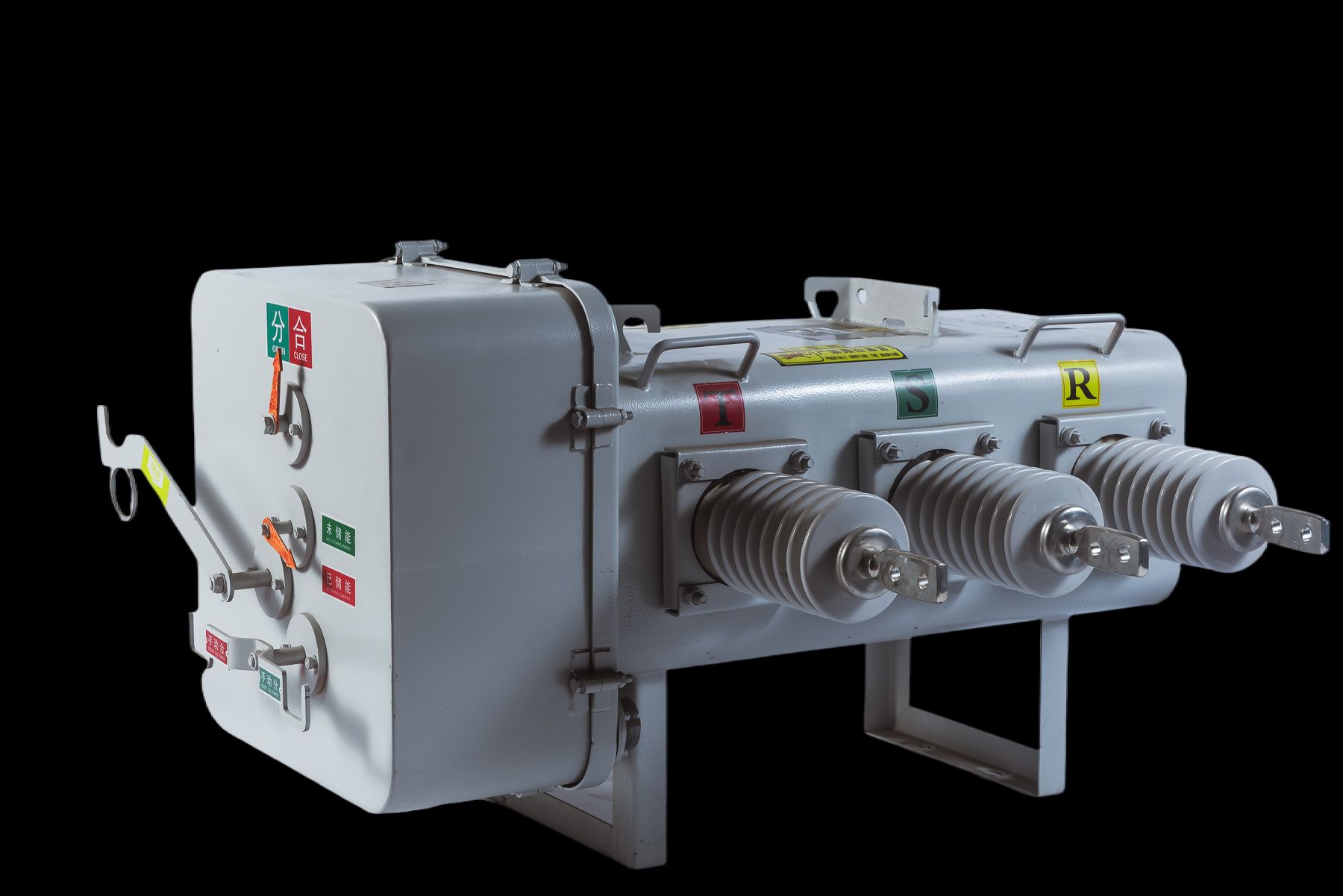
The real reason these switches feel mechanically uncluttered is that the gas does most of the arc-quenching work. A single moving contact pulls away from a fixed arcing contact, and as that happens, a small puffer cylinder compresses SF6 and forces it across the gap. There is no separate blast valve, no external compressor, and no chain of linkages to time everything. The same motion that opens the circuit also squeezes the gas, so the interruptor stays remarkably compact.
Maintenance becomes almost boring because there is so little to inspect. Sealed pole assemblies keep the insulating gas inside for the life of the unit, eliminating oil levels, air filters, and regular refill routines. One spring mechanism stores enough energy for both a trip and a close, and it can be charged by hand or a tiny motor. With fewer exposed rods, pivots, and cams, the most common service tasks are visual checks and an occasional contact resistance measurement.
Repairs tend to be module swaps rather than field overhauls. The nozzle, contacts, and arc chamber are often bundled into a single replaceable interrupter cartridge, so a crew can swap the core in a short outage instead of rebuilding dozens of small parts. That modularity is not a design afterthought; it is what happens when the gas handles the thermal and dielectric stress, leaving the mechanical side straightforward enough to be taken for granted.
Compact Switchgear, Big Impact: Space-Saving Layouts for Urban Substations
Urban substations rarely get the luxury of sprawling footprints. Every square meter counts when you're wedged between apartment blocks, underground parking, or a repurposed industrial lot. Traditional air-insulated switchgear swallows space with wide phase clearances and bulky breakers. Compact switchgear flips that equation, packing the same interrupting and isolation duties into enclosures a fraction of the size. This isn't just a minor shrink; it's a fundamental rethinking of how electrical equipment coexists with dense city life.
The secret lies in gas-insulated or solid-insulated designs where live parts sit millimeters apart instead of centimeters. A single bay of modern compact switchgear can do the work of three conventional panels while occupying less than half the floor area. Modular busbar connections and front-access cable compartments further reduce the need for rear aisles and maintenance corridors. Layouts become tighter, but not cramped—engineers can fit a full 110 kV substation into a footprint that previously only supported a 10 kV distribution room.
The ripple effects go beyond the fence line. Space saved inside the substation means less land acquisition, fewer civil works, and faster permitting in neighborhoods wary of large industrial structures. Some utilities squeeze entire transformer feeders into underground vaults beneath parks or plazas, leaving the surface for community use. Others retrofit aging switchyards without shutting down adjacent streets. Compact switchgear doesn't just fit into the city—it lets the city keep functioning around it.
Field-Tested Strategies for Extending SF6 Switch Service Life
Field experience shows that most SF6 switchgear failures trace back to preventable issues like moisture ingress, lubricant breakdown, and seal degradation. Rather than waiting for a trip or a leak alarm, operators can stretch service life by treating the gas compartment as a living system. Start with a tight sampling schedule: dew point checks every six months catch slow moisture buildup long before it threatens dielectric strength. Pair that with infrared inspection of bushing connections and cable terminations—hot spots often signal loose contacts that accelerate gas decomposition. Small adjustments here pay off in years of extra uptime.
Another overlooked lever is the operating mechanism. Many breakers are retired early not because of gas problems, but because the drive linkage, latches, or dashpots wear out. Replacing factory grease with a modern synthetic lubricant that resists thickening in cold weather can reduce mechanical stress dramatically. Also verify the anti-pumping and trip-free functions during routine maintenance—failure there leads to slow operation and arcing that contaminates the SF6. Keep a log of operation counts; if a breaker approaches its rated mechanical endurance, refurbishing the mechanism is far cheaper than a full replacement.
Finally, manage the gas itself with discipline. Never top up without first checking for leaks using a sensitive sniffer or soapy water on flanges and density monitor fittings. When adding gas, use a dedicated filter-drier cart to strip moisture and acidic byproducts. After any internal inspection, evacuate the compartment to below 1 mbar and hold for at least 30 minutes to confirm tightness before refilling. These practices don't require exotic tools—just consistent attention to detail that turns a 20-year design life into 30 or more years of reliable service.
Choosing the Right SF6 Load Break Switch for Harsh Environments
Selecting an SF6 load break switch for harsh environments goes well beyond checking rated voltage and current. The first thing to examine is the enclosure's resistance to corrosion, moisture ingress, and extreme temperature swings. Coastal sites with salt spray, industrial zones with chemical vapors, and desert installations with fine dust all demand sealed, pressure-tested housings. Look for switches with stainless steel hardware, epoxy-coated bushings, and O-ring sealed operating mechanisms rather than exposed metal parts that degrade quickly. IP ratings alone are not enough; ask for salt-fog test reports and thermal cycling data to confirm the switch can maintain gas tightness over years of thermal expansion and contraction.
Beyond the enclosure, consider how the switching mechanism itself copes with severe conditions. Manual operating handles that require force can become difficult to turn when bearings collect grit or lubricants stiffen in cold weather. Spring-assisted or motorized operators with sealed gearboxes tend to hold up better. Also pay attention to gas monitoring: in environments with wide temperature fluctuations, a simple density switch may give false alarms, so choose models with temperature-compensated gas sensors or integrated pressure-temperature transmitters. Finally, verify that the switch's arc-quenching chamber and contact materials are rated for frequent operation under condensation or high humidity, as this directly affects switching reliability and maintenance intervals.
Integrating SF6 Switches into Automated Distribution Networks Without the Headaches
Field crews often dread the first time they tie an SF6 sectionalizer into a distribution automation scheme. The switch itself works fine as a manual device, but the moment you ask it to report gas density, blade position, and fault flags over DNP3 or IEC 61850, you run into a mess of mismatched register maps, low-battery alarms at 3 a.m., and pressure transducers that drift just enough to trigger false lockouts. The headaches usually stem from treating the SF6 switch as an afterthought in the automation design rather than planning its telemetry and control interfaces from the start.
A more workable approach is to require the switch vendor to deliver a single, pre-configured controller that speaks your protocol natively and maps every relevant point—open/close status, motor charge, SF6 density, temperature-compensated pressure, and alarm contacts—into one logical device profile. Before any field deployment, run a bench test with the actual RTU or gateway you'll use, feeding it simulated gas pressure drops and loss-of-AC conditions. This catches wiring issues and scaling errors early, rather than discovering them during a storm restoration when you need the switch to operate remotely.
For ongoing reliability, avoid relying solely on analog pressure gauges. Digital density sensors with Modbus or DNP3 outputs give you trend data and early leak warnings without needing someone to walk the line. Also insist on sealed-for-life interrupters where possible, and schedule infrared leak checks every couple of years as a backup. Finally, keep the automation firmware version documented and paired with the substation HMI, because an unpatched mismatch can leave you with a perfectly good SF6 switch that the control center simply refuses to acknowledge.
FAQ
Their sealed contacts sit in sulfur hexafluoride gas, which quenches arcs quickly and keeps the unit compact. That means utilities can fit them into tight switchgear rooms without sacrificing interrupting capacity or long-term dielectric strength.
A vacuum interrupter relies on metal vapor plasma to carry current until the next zero crossing, while an SF6 switch cools and deionizes the arc inside a gas-filled chamber. The SF6 approach typically produces a softer switching transient and can handle frequent load breaking with less contact wear.
Ring main units, transformer feeder loops, compact secondary substations, and industrial plants with frequent switching operations all see clear benefits. The design works well where space is tight, humidity is high, or maintenance access is limited.
Regular gas pressure checks, visual inspection of the enclosure seals, and occasional contact resistance measurements are the core tasks. Manufacturers also recommend replacing desiccant breathers and checking the operating mechanism lubrication every few years, depending on operating frequency.
Yes, SF6 has a high global warming potential if released. Modern designs use sealed-for-life pressure systems, leak detection sensors, and gas recycling during decommissioning. Some suppliers also offer alternative gas mixtures, though SF6 remains dominant for its proven insulation and switching performance.
Rated voltage and current, short-circuit making capacity, mechanical endurance class, and the expected number of load break operations are the starting points. It also helps to verify the gas pressure monitoring options, cable entry configuration, and whether the switch needs to integrate with SCADA or remote terminal units.
Most switches have a density sensor or pressure gauge with clear green/red zones. If the pressure drops into the red zone, the switch should be taken out of service, leak-tested with a sniffer or soap solution, and recharged only after the leak is repaired. Continuing to operate with low gas pressure risks reduced interrupting capability.
Many models are rated for outdoor use with IP54 or higher enclosures and UV-resistant finishes, but direct exposure to heavy rain or salt spray can shorten seal life. In coastal or extreme weather areas, a simple canopy or kiosk is still a wise investment despite the outdoor rating.
Conclusion
Reliability in power distribution often hinges on the quiet, unglamorous components that keep circuits open or closed under fault conditions. SF6 load break switches continue to dominate this niche because the gas's electronegative properties suppress arcs faster than air or vacuum in compact chambers, and that performance hasn't been matched by alternatives when space and cost are both constrained. What makes modern designs stand out isn't just the gas, though—it's the stripped-down mechanical actuation. Fewer moving parts, simpler spring mechanisms, and corrosion-resistant contacts translate into less that can go wrong over decades. Urban substations benefit directly from this pairing: a switchgear lineup that can be installed in a basement or a repurposed industrial building without sacrificing interrupting capacity. The compact footprint doesn't force compromises on safety either; sealed pressure systems and visible isolation gaps remain standard.
Field experience shows that extending service life comes down to disciplined maintenance rather than heroic interventions. Routine checks on gas density, contact wear indicators, and operating handle torque catch problems before they become failures. For coastal or heavily polluted sites, selecting models with stainless steel enclosures, IP-rated bushings, and UV-stabilized cable boxes keeps moisture and salt spray out. Automation integration, often the headache in older networks, has become surprisingly straightforward with standardized remote terminal units and status auxiliary contacts. Retrofitting an SF6 switch into a SCADA environment no longer requires custom engineering for every feeder; most manufacturers now ship with pre-wired motor operators and communication-ready interfaces. The result is a switch that can be monitored from a control room while still allowing manual operation for maintenance crews—practical redundancy that matters when outages hit. None of these advantages require exotic materials or unproven technology. Instead, the best SF6 load break switch solutions combine proven interrupting performance with thoughtful, field-oriented design choices that keep distribution networks resilient without demanding constant attention.
Contact Us
Contact Person: Julion
Email: [email protected]
Tel/WhatsApp: 8617351370631
Website: https://www.deyunelectric.com