

Wholesale Running Socks: Your Complete Guide to Bulk Purchasing for Sports and Retail
2026-05-08
Whether you're gearing up for a marathon team or stocking your retail shelves, finding the perfect wholesale running socks goes beyond just price per pair. The right moisture-wicking fabrics, arch support, and durability can make or break performance—and repeat business. In this guide, we’ll unpack everything from material innovations to bulk-ordering hacks, with a spotlight on Mingjun—a manufacturer raising the bar for custom athletic socks. Ready to stride ahead of the competition? Let’s dive in.
Why Bulk Running Socks Make Sense for Sports Teams and Retailers
When a sports team outfits its members, the little things often get overlooked. Running socks, for instance, might seem trivial, but anyone who has dealt with blisters or uncomfortable seams knows they matter. Buying in bulk isn't just about saving a few dollars—it's about ensuring every athlete has access to the same quality gear, which builds unity and prevents the distraction of mismatched or worn-out socks. Coaches and managers quickly realize that keeping a hefty supply on hand means fewer last-minute scrambles and more focus on performance.
For retailers, stocking bulk running socks is a quiet but reliable revenue booster. These aren't impulse buys; customers come in knowing they need multiple pairs, whether for a team, a running club, or just personal rotation. By offering bulk options at a slight discount, you move more inventory without slashing margins. It also positions your shop as a go-to for local teams, creating repeat business that extends well beyond socks. Plus, the simplicity of a bulk display cuts down on restocking hassle compared to managing dozens of individual styles.
The practical advantages extend to quality and customization. When ordered in larger quantities, sock manufacturers often allow for team logos or specific color accents without exorbitant fees. This transforms a basic accessory into a tool for identity and pride, something each runner carries with them on every mile. Durability also tends to improve at the bulk level, as suppliers use better yarns and construction methods to meet long-term contracts, meaning fewer replacements down the line. In the end, it's a small shift that pays off in comfort, convenience, and cohesion.
Key Features to Look for in High-Performance Running Socks
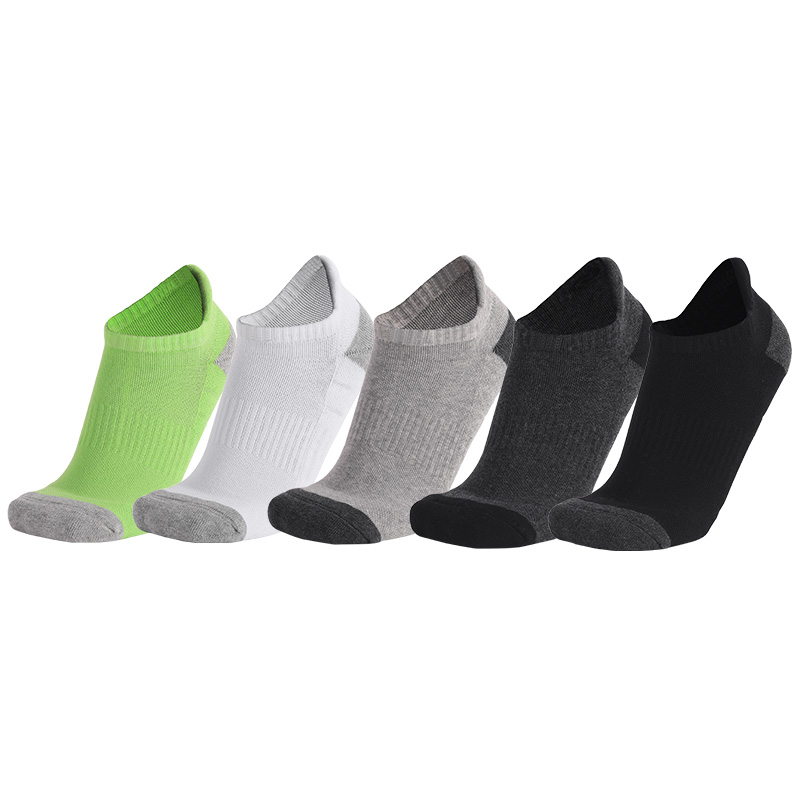
The real game-changer in a running sock is moisture management. Look beyond basic cotton blends and focus on fabrics like merino wool or advanced synthetics (nylon, polyester, polypropylene) with engineered ventilation zones. These materials don’t just wick sweat—they actively transport it away from the skin, reducing the risk of blisters and that heavy, waterlogged sensation that can slow you down on longer distances. A truly high-performance sock will keep your feet feeling dry and cool even when the miles stack up.
Cushioning is not about bulk; it’s about strategic placement. Zone-specific padding under the heel and forefoot absorbs repetitive impact without collapsing into a shapeless mass over time. Combined with a snug, almost second-skin arch support band, the sock should feel like a precise extension of your foot, minimizing slippage inside your shoe. This locked-in fit prevents the micro-abrasions that lead to hot spots, all while allowing your toes to splay naturally—a detail often overlooked in mass-market designs.
Seam construction can make or break a long run. Flatlock or hand-linked toe seams are non-negotiable if you’ve ever experienced that nagging rub on your pinky toe at kilometer 15. Also, consider the sock’s durability story: reinforced high-wear zones (heel and toe) done without harsh internal ridges, and a flex-friendly cuff that stays up without digging. The best socks quietly disappear on your feet, letting you forget they’re even there—right until you realize you haven’t thought about foot discomfort for the entire session.
Material Matters: Choosing Fabrics That Go the Distance
When it comes to building a wardrobe that lasts, the fabric you choose is everything. It’s not just about softness or sheen—true quality reveals itself over time. A shirt that holds its shape after dozens of washes, trousers that don’t pill after a season, a jacket that ages gracefully with wear: these are the pieces that earn their place. The right textiles resist fading, stretching, and wear, making them silent partners in your daily routine.
Natural fibers with tight weaves, like high-twist wool, long-staple cotton, and linen with substantial weight, often outperform their cheaper counterparts. They breathe better, endure more, and develop a patina that synthetics can’t replicate. It’s worth looking for materials that are woven densely enough to withstand friction yet remain comfortable against the skin. Small details, like reinforced seams or double-faced construction, hint at a fabric’s ability to go the distance.
Don’t overlook blends either—thoughtfully engineered mixes can combine the best of both worlds, like durability with a softer hand. Ultimately, trusting your fingers and paying attention to how a cloth recovers after stretching or wrinkling tells you more than any label. Invest in fabrics that feel substantial but not stiff, ones that promise to evolve with your life rather than fall apart after a few outings.
Customization Options to Elevate Your Brand
True connection with an audience often starts before a single product is sold. Customization goes beyond a printed logo—it’s about embedding your story into the physical details that customers interact with every day. From selecting a shade that mirrors your brand’s personality to choosing a texture that feels unmistakably yours, these decisions quietly signal that you’ve thought deeply about the experience you want to create.
Consider how small shifts in material or finish can reshape perception. A matte-coated surface might suggest understated elegance, while a soft-touch laminate invites touch and curiosity. Even the way a product is assembled—hidden stitching, a deliberate seam placement, or an interior lining that contrasts with the exterior—can become a signature that loyal customers recognize instantly. These aren’t flashy gestures; they’re subtle, deliberate choices that accumulate into a distinct brand language.
Beyond the object itself, customization extends to how it arrives. Unwrapping something that feels tailored—a note with a handwritten feel, packaging that fits exactly, tissue paper in an unexpected hue—turns a transaction into a moment. It reminds people there’s intention behind what you do, and that their choice to support you was worth it. Over time, that care builds a kind of trust that no generic product could ever replicate.
Navigating Minimum Order Quantities and Pricing Tiers
Minimum order quantities often feel like a brick wall when you're trying to test a new product or keep inventory lean. Suppliers set MOQs to cover their own production costs, but that doesn't mean the number is carved in stone. Many are open to a conversation—especially if you can show you're serious about a long-term relationship or willing to pay a slightly higher per-unit price on the first run.
Pricing tiers, on the other hand, reward volume in a more transparent way. The jump from 500 to 1,000 units might slash the unit cost enough to justify holding extra stock, but it's easy to get tunnel vision on the discount and ignore carrying costs. A quick back-of-the-envelope math on storage and spoilage risk can keep you from over-ordering just to hit a tier.
Sometimes the best move is bundling orders across products to meet MOQs without drowning in one SKU. Or, if your supplier is rigid, look for a regional distributor who already buys in bulk and sells smaller lots at a markup—it eats into margin but can be a smarter way to validate demand before you go all in.
How to Market Your Running Sock Line for Maximum Impact
Building a running sock brand that truly clicks with athletes starts by spotlighting what makes your product feel different on the road. Instead of listing technical specs, share real moments—like how your socks handle a surprise drizzle during a 10K or why they never slip at mile 20. Show your socks in motion. Partner with local run clubs for test runs, capture unscripted feedback, and let that raw honesty shape your visuals and voice. People want gear that’s part of their story, not just another item in the drawer.
Push past generic social posts and dive into niche communities where running socks are a quietly passionate topic. Swap polished ads for casual, behind-the-scenes clips that show the design tweaks, the failed prototypes, or the obsession over a seamless toe. Run a challenge that rewards creativity over performance—like best muddy sock photo—and feature the winners as your next campaign stars. When your audience sees themselves in your brand, they become loyal advocates, not just one-time buyers.
Offline still has a surprising punch. Think pop-ups at marathon expos where people can feel the fabric, or quirky vending machines stocked with emergency socks at trailheads. Send sample pairs to running influencers with zero script requirements; let them invent their own use case. How you handle the unboxing moment matters too—make it feel less like a transaction and more like joining a tribe. By marketing through experience rather than message, your running sock line becomes something runners genuinely want to talk about.
FAQ
It comes down to consistent quality and cost efficiency. Sports teams can outfit every member with matching gear that performs, while retailers lock in lower per-unit costs and ensure reliable stock for customers who keep coming back for their favorite running essentials.
Focus on moisture-wicking fabrics to prevent blisters, reinforced heels and toes for durability, arch support that stays put during long miles, and a seamless toe closure to eliminate irritation. Breathable mesh zones also help regulate temperature during intense runs.
Cotton is rarely recommended—it retains sweat and leads to blisters. Polyester blends dry fast and hold their shape well, making them a workhorse for daily training. Merino wool is the premium option—naturally odor-resistant, temperature-regulating, and soft enough that many runners swear by it for both summer and winter miles.
Absolutely. Most manufacturers offer customization options like logo placement, color combinations that match your brand palette, and even bespoke patterns. Just keep in mind that custom orders usually require a larger commitment and longer lead times than off-the-shelf stock.
It varies wildly by supplier. Some smaller workshops may accept orders of 50–100 pairs per style, while larger factories often set MOQs at 500 or more. Always ask about tiered pricing—the per-pair cost drops significantly as quantities rise.
Smart buyers bundle socks with shoes or apparel to boost basket size, introduce limited-edition seasonal colors to create urgency, and use impulse displays near the checkout. Buying deeper on best-selling styles also allows you to negotiate sharper pricing and pass only a small markup to customers while staying competitive.
Yes. Spring sees spikes in lightweight, brighter socks as runners head outdoors; fall often brings demand for merino wool blends. Holiday gifting seasons push gift packs and novelty designs. Ordering ahead for these cycles, but not so far that storage eats your margin, is the balancing act.
Conclusion
Wholesale running socks offer a practical and cost-effective edge for sports teams and retailers alike. Buying in bulk drastically cuts per-unit costs while ensuring a uniform look and performance across every pair, which is essential for team cohesion or a consistent retail line. When choosing socks, prioritize features that truly matter in high-performance settings: targeted cushioning, moisture-wicking breathability, and an anatomical fit that eliminates bunching and blisters. The fabric blend is equally crucial—merino wool regulates temperature naturally and resists odor, while synthetics like polyester or nylon add durability and fast drying. Reinforced heels and toes, along with seamless construction, can make the difference between a sock that lasts a season and one that barely survives a game.
Beyond the basics, customization opens doors to brand elevation. Adding team colors, logos, or even personalized packaging turns each pair into a mobile billboard and a memorably branded experience. Navigating minimum order quantities and tiered pricing requires a tactical approach, as suppliers often reward larger commitments with steeper discounts—knowing where to draw the line on inventory vs. budget is key. Finally, strategic marketing brings everything full circle: engage local running communities with event sponsorships, leverage influencer partnerships, and use limited-edition drops to build buzz. When quality materials, thoughtful design, and smart promotion align, bulk running socks become more than just gear—they become a profitable staple that keeps both athletes and customers coming back for more.
Contact Us
Contact Person: Tiga
Email: [email protected]
Tel/WhatsApp: 8613058331729
Website: https://www.china-socksfactory.com/