

Wholesale Stacking Doors: How to Choose the Right System for Your Next Project
2026-09-22
You've seen stacking doors that glide silently and others that jam after six months. The difference rarely shows up in product photos. For your next wholesale stacking door purchase, focus on what separates a showroom sample from a decade of daily use – and why NORTON keeps appearing in the specs of contractors who've learned the hard way. Choosing the right system isn't a catalog decision; it's a field test in disguise.
Site dimensions drive more decisions than the door catalog suggests
Most people assume a door is just a door—standard width, standard height, a predictable swing. But once you start measuring the actual opening, the surrounding walls, and the traffic flow through that space, the catalog's neat categories fall apart. A few inches of clearance on the hinge side can mean the difference between a comfortable daily route and a constant shoulder bump. The site itself starts dictating choices: maybe a pivot door fits better than a traditional hinged one, or a sliding panel becomes the only sensible answer when there's no room for an arc of swing.
Then there's the matter of how the door meets the floor, the ceiling, and the adjacent corners. A site with uneven settlement or a slight slope will punish a door that was sized purely from a brochure drawing. You might find yourself trimming the bottom edge more than expected or adjusting the rough opening after the fact—both of which push you away from the standard product lines. Instead of asking "which door do I like?" you start asking "what does this wall actually allow?" That shift in thinking rarely appears in any catalog, but it's the only way to avoid costly rework.
Even the material and hardware selections get pulled by the site's quirks. High humidity near a bathroom, direct afternoon sun on an entryway, or a narrow hallway that sees two-way foot traffic—all these factors quietly override the aesthetic preferences you brought to the project. A heavy solid-wood slab might look beautiful in the showroom, yet it can warp if the site's microclimate isn't kind. The door catalog offers options; the actual dimensions and conditions of the site make the final decision for you.
Compare stacking bay widths, not just the number of panels
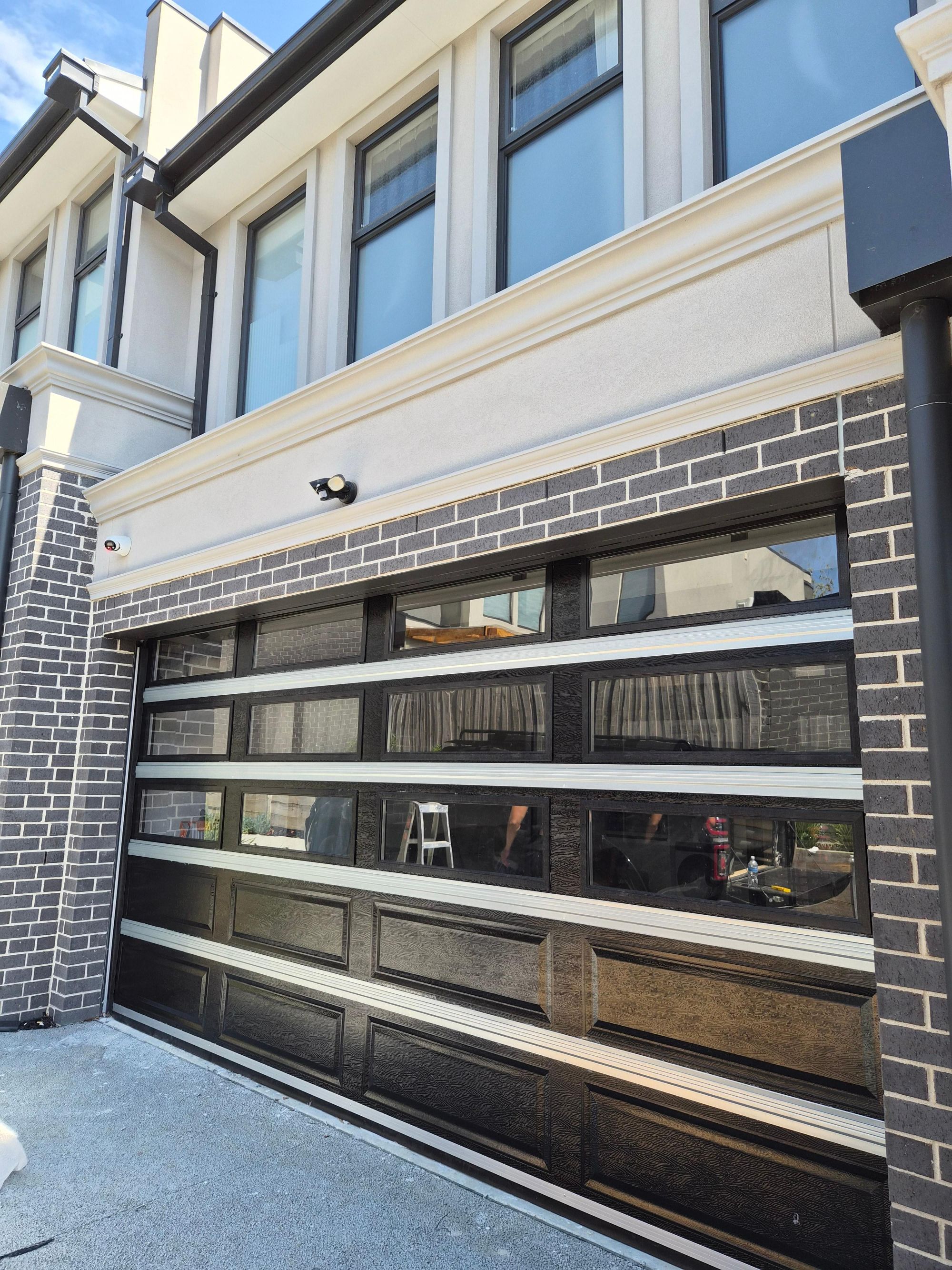
When evaluating racking layouts, buyers often fixate on how many panels fit into a row. That figure alone can mislead. A system with more panels but narrower bays may force awkward load distribution or leave wasted aisle space. Bay width shapes how easily workers can slide full pallets in and out, and it determines whether odd-sized stock will catch on uprights or jam mid-aisle.
Two setups can hold the same total panel count yet perform very differently once you measure the clear opening between uprights. A wider bay allows deeper reach without repositioning, which shortens cycle times during peak shifts. It also leaves room for slight misalignment when a forklift enters at an angle, cutting down on frame strikes and bent panels. That operational slack rarely shows up in a spec sheet that only lists panel quantity.
A smarter comparison starts with the bay width you actually need for the bulkiest item in rotation. If one option uses narrower bays, you may be forced to buy more frames to reach the same storage area, which adds cost and eats floor space. Checking usable width per bay, not just the headline panel number, gives a truer picture of long-term throughput and damage risk.
Track and roller quality determine how the door feels after a year
Within the first few months, cheap tracks and rollers start to show their true nature. A door that once glided quietly begins to hitch, shudder, or emit a dry scrape every time you open it. High-quality hardware, by contrast, uses hardened steel rails paired with precision-sealed bearings. After a year of daily use, the movement still feels nearly identical to day one—no extra push, no sudden drop at the end of the travel.
What rarely gets talked about is how tolerances and surface finish shape long-term feel. A rail that is even slightly out of straight will force one roller to carry more load, causing uneven wear and a wobble you can feel in the handle. Cheap zinc plating flakes off after repeated cycles, leaving rough patches that grind against the roller. Better brands run each track and roller set through a break-in cycle before packaging, so the contact surfaces mate cleanly and stay quiet well past the first year.
If you are working with a limited budget, the smartest upgrade is not the whole door but the rollers themselves. Replacing stock plastic wheels with nylon or steel units that have shielded ball bearings usually transforms the glide more than any other single change. The track will also last longer because the rolling resistance drops, meaning less heat and less abrasion at the contact point. That is the difference you notice every morning a year later: a door that still moves like it was just installed.
Thermal performance lives in the frame details, not the glass sticker
The sticker on the glass is a lab number, not a field promise. It tells you how the center of a double or triple pane performs, but it says nothing about the frame that holds it, the spacer that separates the panes, or the seal that stops air from sneaking around the sash. In a real wall, those details dominate.
A decent frame earns its performance through small, unglamorous choices: a thermal break that interrupts metal-to-metal conduction, a warm-edge spacer that keeps the glass perimeter from becoming a cold line, and gaskets that stay flexible after years of compression. Without these, the glass can carry a premium low-e coating and still leave the room drafty.
The difference is rarely visible from across the street. It lives in the corners, where frame profiles meet and where sealant has to be continuous; in the hardware, where a multi-point lock pulls the sash tight; and in the installation, where a sloppy opening can undo the best factory numbers. That is why judging a window by its glass sticker is like judging a house by its front door paint.
Finish durability depends on site exposure and cleaning habits
A finish that holds up beautifully on a sheltered porch can fail within a year on a south-facing deck. Sun, rain, snow, and even salt air work on the coating long before you notice any change. The same product performs differently because exposure is never uniform. One side of a structure may bake in afternoon heat while another stays damp for days. Ignoring these differences leads to premature peeling, chalking, or loss of sheen.
Cleaning habits shape lifespan just as much as weather. Dirt and debris trap moisture against the surface, inviting mildew and breakdown. A quick rinse every few months does more for durability than many people expect. But harsh cleaners or aggressive scrubbing can strip the finish faster than leaving it alone. The goal is to remove buildup without wearing away the protective layer.
A realistic maintenance schedule starts with observation. Watch where water pools, where leaves collect, and where sunlight hits hardest. Adjust cleaning frequency to match those conditions. A shaded, low-traffic area needs less attention than a sunny spot near trees. Small changes in routine, like wiping up spills before they dry or moving potted plants a few inches away from siding, can extend the life of a finish by several seasons.
Custom configurations change lead times more than paint color does
Paint color rarely moves a delivery date the way many buyers assume. It is a final-stage choice applied in the same booths regardless of shade, so a blue truck and a white truck typically flow through the line at nearly the same pace. Minor delays can happen when a paint shop switches between colors frequently, but those are measured in minutes or hours, not days.
Custom configurations tell a different story. Engine choices, transmission types, suspension packages, and advanced electronics each require distinct parts, wiring harnesses, and software calibrations. A vehicle with a rare combination may wait for specific components to arrive, and assembly workers must adjust to different build instructions, which slows the entire sequence. Scheduling becomes harder when fewer units share the same spec, pushing that order further back in the queue. Paint color, by contrast, remains a simple cosmetic variable that does not force the factory to resequence parts or wait on suppliers.
FAQ
Look beyond the per-unit price. You'll want to check track reinforcement, roller quality, and how the panels lock together when fully opened. Low-cost systems often use thinner aluminum and weaker hardware that leads to sagging or binding within a year. Ask for samples and open and close a full panel set before committing to a bulk order.
Most residential systems handle two to six panels comfortably, while commercial setups can go up to ten or more if the track and header are engineered for the extra weight. The real limit often comes down to floor support and how much wall space you can sacrifice for the stacking pocket. Overloading the track is the fastest way to shorten the system's life.
Aluminum gives you the best strength-to-weight ratio and is ideal for large openings, but it conducts heat unless you select a thermally broken profile. Vinyl is budget-friendly and low maintenance, yet it can flex in extreme temperatures. Wood looks premium but requires more upkeep and isn't always the best choice for high-traffic commercial projects. Match the material to the building's exposure and daily use.
Freight is a big one—these doors are heavy and oversized, so shipping can eat into your margin quickly. You also need to factor in crating, liftgate service, and sometimes a forklift on site. Then there's the hardware: stacking doors often require upgraded tracks, soft-close mechanisms, and floor guides that aren't always included in the base quote. Always ask for a line-item breakdown.
Request a single sample door or a scaled-down panel section before placing the full order. Test how smoothly the panels roll, how tight the seals are, and whether the frame remains rigid when you push against the center. Also ask about their testing standards—wind load ratings, water infiltration tests, and cycle testing matter far more than a glossy catalog.
Yes, but you need to specify thermal breaks, low-E glazing, and reinforced weatherstripping. Look for systems tested to coastal or high-wind standards if the project is near the ocean or in a storm zone. Drainage channels in the frame are also critical to prevent water pooling at the threshold. Don't assume an interior-style door will perform the same outside.
Most mid-sized orders ship in four to eight weeks, but that can stretch to twelve weeks or more if you're ordering custom sizes, special finishes, or impact-rated glass. The best approach is to lock in your specifications early and ask the manufacturer about current production backlog. Delays usually come from last-minute hardware changes, not the door panels themselves.
Conclusion
When you're pricing wholesale stacking doors, the first thing to do is forget the catalog's default panel count. Measure the actual opening, and think about how much wall space you can dedicate on either side. A four-panel setup might sound standard, but if the real constraint is the width of the stacking bay, you'll end up with panels that bunch awkwardly and block the view. Always compare bay widths across suppliers—two systems can both list four panels but leave you with very different clear openings. Then look past the panel count entirely: the track and roller quality is what you'll notice after a year of daily use. Cheap rollers wear into flat spots, and tracks that flex under load make the door feel heavy and noisy. Ask to see the roller bearings and the profile of the track before you commit, because that's what separates a door that still glides from one that needs a shove.
Thermal performance is another area where the spec sheet can mislead. A low-E glass sticker tells you almost nothing if the frame is a thin aluminum extrusion without a proper thermal break. The frame's design—how the meeting stiles seal, how the sill is detailed, and whether the interlock is actually tight—has more impact on condensation and air leakage than the glass coating. Similarly, finish durability depends less on the paint brand and more on your site. A coastal project with salt spray and strong sun will punish a standard powder coat much faster than an inland retail storefront. Match the finish to the exposure and be realistic about cleaning frequency; some finishes look great in a showroom but etch if they're not washed regularly. Finally, if you need a custom stacking configuration—offset panels, a corner opening, a recessed track—expect that to affect lead times more than any color choice. The frame engineering changes the production schedule, not the color booth. Plan those details early so the doors arrive when the rest of the project is ready for them.
Contact Us
Contact Person: Cyril He
Email: [email protected]
Tel/WhatsApp: 8613969697307
Website: https://cqyqgd.en.alibaba.com/