

How Can Window Tape Maintain Adhesion When Building Materials Move With Temperature?
2026-10-16
A facade engineer investigates a warranty claim on a high-rise project. The Window Tape at the window-to-wall junction has debonded at several locations on the south elevation. The failures are concentrated at the corners, where the aluminum frame meets the concrete slab. The engineer measures the gap width: 12 mm in the morning at 15°C. In the afternoon, the sun heats the aluminum frame to 60°C, and the gap closes to 8 mm. The thermal movement is 4 mm. The tape is a 0.5 mm thick acrylic foam with an adhesive that was not formulated for this level of cyclic movement. The adhesive has undergone creep and lost contact. This guide explains how to select and apply window tape that maintains adhesion under thermal movement.
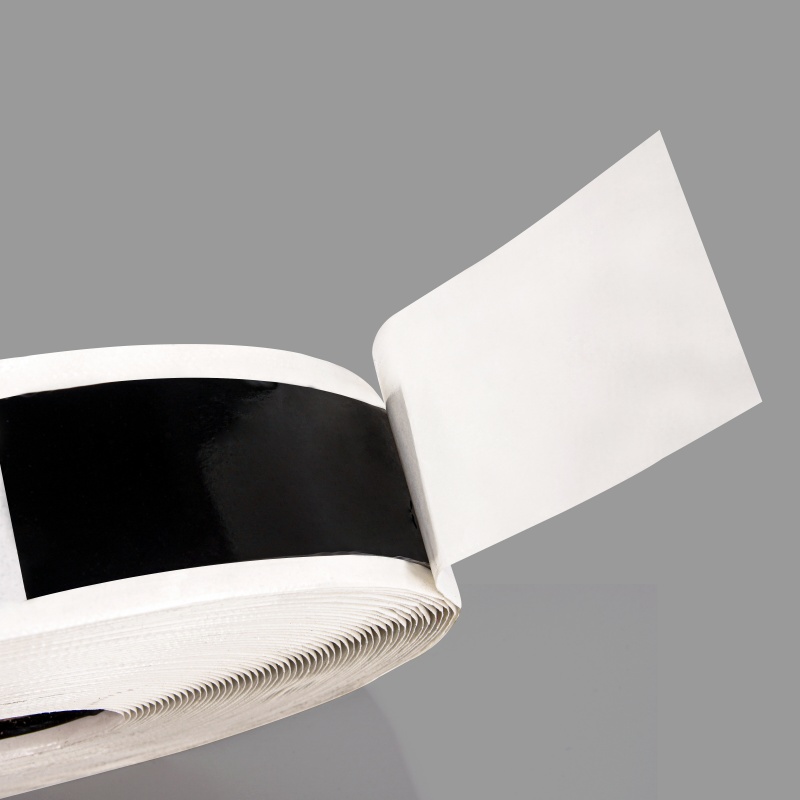
1. How Does Thermal Movement Affect Window Tape Adhesion?
Building materials expand and contract with temperature changes. The amount of movement depends on the material and the temperature range. Aluminum has a thermal expansion coefficient of 23 x 10⁻⁶ per degree Celsius. Concrete has a coefficient of 10 x 10⁻⁶. Glass has a coefficient of 9 x 10⁻⁶. When these materials are joined, the differential movement creates shear and peel stresses in the Window Tape. The tape must accommodate this movement without losing adhesion. The table below shows the thermal movement for common building materials over a 10-meter length and a 45°C temperature change.
| Material | Expansion coefficient (10⁻⁶/°C) | Movement over 10 m and 45°C | Compatibility with concrete |
| Aluminum | 23 | 10.4 mm | High differential |
| Concrete | 10 | 4.5 mm | Baseline |
| Glass | 9 | 4.1 mm | Low differential |
| PVC window frame | 80 | 36.0 mm | Very high differential |
| Steel | 12 | 5.4 mm | Moderate differential |
The differential movement between aluminum and concrete is 5.9 mm over 10 meters. For a window tape that is 12 mm wide, this movement creates a shear strain of 49 percent. The adhesive must be able to accommodate this strain without debonding. In our factory, we manufacture Window Tape with adhesives that are formulated for high shear strain. The adhesive is a viscoelastic acrylic that deforms under stress and recovers when the stress is removed. Xiong County Xiashi Packing Co., Ltd. has been manufacturing window tape for over 15 years.
2. What Adhesive Properties Are Required for Thermal Cycling?
The adhesive in a Window Tape must have three properties to survive thermal cycling. The first is high peel strength, which resists the peeling force at the edges of the tape. The second is high shear strength, which resists the sliding force along the length of the tape. The third is high elongation, which allows the adhesive to stretch without breaking. The table below shows the required adhesive properties for different movement levels.
| Movement level | Peel strength (N/cm) | Shear strength (kPa) | Elongation at break (%) | Recommended adhesive |
| Low (< 2 mm) | 8 – 12 | 50 – 80 | 200 – 400 | Standard acrylic |
| Moderate (2 – 5 mm) | 12 – 18 | 80 – 120 | 400 – 600 | High-shear acrylic |
| High (5 – 10 mm) | 18 – 25 | 120 – 180 | 600 – 800 | Viscoelastic acrylic |
| Very high (> 10 mm) | > 25 | > 180 | > 800 | Modified silicone or butyl |
In our factory, we use a viscoelastic acrylic adhesive for our high-movement Window Tape. The adhesive has a peel strength of 20 N/cm, a shear strength of 150 kPa, and an elongation at break of 700 percent. This allows the tape to accommodate up to 8 mm of movement without debonding. We also offer a butyl-based tape for very high movement applications. Xiong County Xiashi Packing Co., Ltd. provides adhesive property data for all of our products.
3. How Does Surface Preparation Affect Adhesion Durability?
The best adhesive will fail if the surface is not properly prepared. The surface must be clean, dry, and free of dust, oil, and release agents. The surface energy must be high enough for the adhesive to wet out and form a bond. The table below shows the surface preparation requirements for common building materials.
| Substrate | Surface energy (mN/m) | Cleaning method | Primer required |
| Aluminum (anodized) | 45 – 50 | Isopropyl alcohol wipe | No |
| Aluminum (mill finish) | 35 – 40 | Solvent wipe + abrasion | Yes |
| Concrete | 40 – 45 | Wire brush + primer | Yes |
| Glass | 55 – 60 | Isopropyl alcohol wipe | No |
| PVC | 30 – 35 | Solvent wipe + primer | Yes |
| Stainless steel | 40 – 45 | Solvent wipe + abrasion | Yes |
Field engineer's note: In our factory, we have analyzed debonded Window Tape from field failures. Over 60 percent of the failures were caused by inadequate surface preparation. The most common error is applying the tape to a dusty or oily surface. The adhesive cannot wet out the surface, and the bond is weak from the start. The second most common error is failing to use a primer on low-surface-energy substrates such as PVC and mill-finish aluminum. The primer increases the surface energy and promotes adhesion. We recommend that the installer always clean the surface with isopropyl alcohol and apply a primer if the surface energy is below 40 mN/m.
4. How Should the Tape Be Applied to Accommodate Movement?
The application method affects the tape's ability to accommodate movement. The tape should be applied with a slight compression to ensure full contact. The edges should be rolled to prevent lifting. The tape should not be stretched during application, as this creates residual stress that reduces the movement capacity. The table below shows the recommended application parameters.
| Application parameter | Recommendation | Effect on movement capacity |
| Application temperature | 10 – 40°C | Below 10°C reduces wet-out |
| Compression force | 10 – 20 N/cm width | Ensures full contact |
| Rolling pressure | 20 – 30 N/cm width | Prevents edge lifting |
| Stretch during application | None (< 5%) | Stretching reduces movement capacity |
| Dwell time before movement | 24 hours at 20°C | Allows adhesive to wet out and build strength |
In our factory, we provide an application guide with every roll of Window Tape. The guide includes the recommended compression force, the rolling pressure, and the minimum dwell time. We also provide a primer and a roller for proper installation. Xiong County Xiashi Packing Co., Ltd. offers on-site training for installation crews.
Frequently Asked Questions About Window Tape Adhesion and Thermal Movement
Summary for Facade Engineers and Installers
Window Tape maintains adhesion under thermal movement when the adhesive has the right combination of peel strength, shear strength, and elongation. The tape must be selected based on the expected movement, which is determined by the thermal expansion coefficients of the building materials. Surface preparation is critical: the surface must be clean, dry, and have sufficient surface energy. A primer may be required for low-energy substrates. The application method must avoid stretching and ensure full contact through compression and rolling. By following these guidelines, installers can achieve durable weather sealing that accommodates the thermal movement of the building envelope. Xiong County Xiashi Packing Co., Ltd. has been manufacturing window tape for over 15 years and provides full technical support for our customers.
Xiong County Xiashi Packing Co., Ltd. manufactures Window Tape with viscoelastic acrylic and butyl adhesives for high-movement applications. We provide adhesive property data, surface preparation guides, and application training for all of our products.