

What Makes PTFE Thread Sewing Essential for Demanding Industrial Applications?
2026-09-30
When conventional sewing threads face high temperatures, aggressive chemicals, ultraviolet exposure, or continuous mechanical stress, maintaining seam strength and long-term stability can become a major challenge. PTFE Thread Sewing provides a specialized solution for demanding industrial applications because polytetrafluoroethylene combines chemical resistance, temperature stability, low friction, UV resistance, and durability. These characteristics make PTFE sewing thread particularly suitable for filter bags, industrial filtration products, protective fabrics, chemical equipment, and other applications where ordinary threads may not provide sufficient service life. Suzhou Nett New Material Technology Co.,Ltd. focuses on PTFE sewing thread and related high-performance materials, providing customized specifications for different industrial requirements.
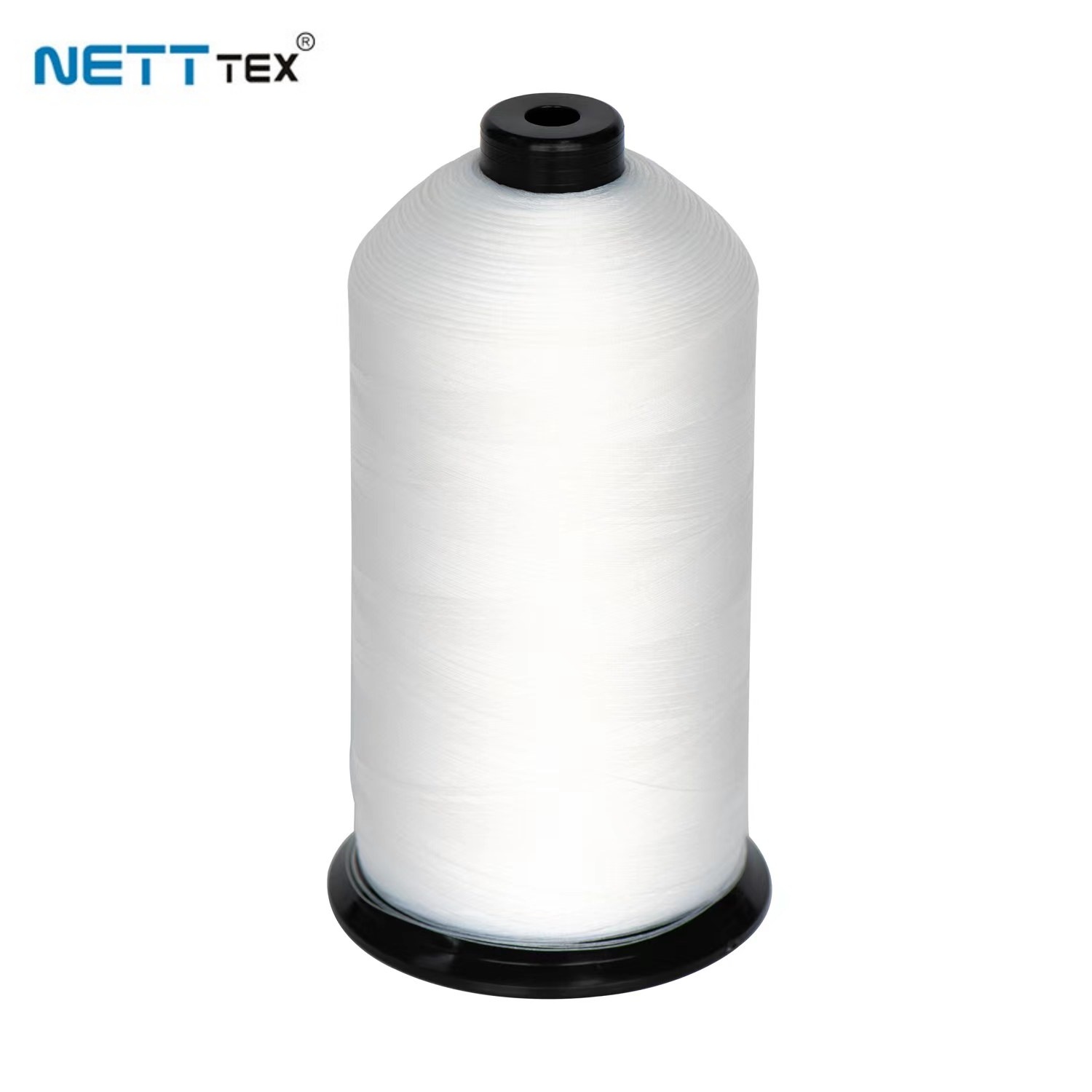
Why Is PTFE Thread Sewing Suitable for Harsh Environments?
PTFE is a fluoropolymer known for its chemical stability and resistance to challenging operating conditions. When processed into sewing thread, these material characteristics can help manufacturers create seams that remain functional under demanding conditions.
For industrial filtration, for example, filter bags may operate in environments containing high temperatures, corrosive gases, dust, or chemical substances. The sewing thread must therefore perform more than simply connecting two pieces of fabric. It becomes an important part of the overall structural integrity of the finished filter bag.
The main performance advantages include:
| Performance | Benefit in Sewing Applications |
|---|---|
| High temperature resistance | Helps maintain seam performance in elevated-temperature environments |
| Chemical resistance | Suitable for contact with many aggressive chemical media |
| UV resistance | Supports outdoor and long-term applications |
| Low friction | Helps improve sewing smoothness and reduce thread abrasion |
| Corrosion resistance | Useful in chemical and industrial environments |
| Dimensional stability | Helps maintain consistent stitching performance |
| Long service life | Reduces the frequency of thread-related replacement |
According to Suzhou Nett New Material Technology Co.,Ltd., its PTFE sewing thread can be supplied in various specifications, including different deniers and colors, allowing buyers to select thread according to the requirements of specific applications.
What Effects Can PTFE Thread Sewing Deliver?
The performance of a finished product is strongly influenced by the quality and compatibility of its sewing thread. A high-performance thread can help manufacturers achieve more reliable seams, particularly when fabrics are exposed to heat, chemicals, moisture, or repeated mechanical stress.
1. More Reliable Seams
For filter bags and industrial fabrics, stitching is a critical structural connection. A suitable PTFE thread can provide stable sewing performance and help reduce premature seam failure.
This is especially important for industrial filtration systems, where a damaged seam may affect the structural integrity of a filter bag and consequently influence filtration performance.
2. Better Chemical Resistance
PTFE has excellent resistance to many acids, bases, solvents, and other aggressive chemicals. This makes PTFE Thread Sewing useful in chemical processing and industrial filtration environments where conventional textile threads may have limited resistance.
3. Stable Performance Under Heat
Temperature is another important consideration. PTFE can maintain useful properties across a broad temperature range, and PTFE sewing thread is therefore frequently considered for high-temperature industrial applications. Suzhou Nett describes its PTFE sewing thread as suitable for applications requiring high temperature, corrosion, UV, and friction resistance.
4. Improved Long-Term Durability
Industrial sewing products may experience continuous tension, friction, vibration, and environmental exposure. A thread with good wear and chemical resistance can contribute to longer-lasting seams and help reduce maintenance requirements.
Where Is PTFE Thread Sewing Used?
The applications of PTFE sewing thread extend beyond ordinary textile manufacturing. Its material characteristics make it particularly valuable in specialized industrial sectors.
Common applications include:
-
Industrial filter bags
-
Dust collection systems
-
Chemical filtration equipment
-
High-temperature filtration
-
Industrial protective fabrics
-
Chemical equipment covers
-
Environmental protection equipment
-
Food-processing filtration systems
-
Medical and specialized textile applications
-
High-performance industrial fabrics
Among these applications, filter bag manufacturing is particularly important. The sewing thread must work together with the filter fabric to create a durable and stable structure. Suzhou Nett specifically supplies PTFE sewing thread and filter-bag-related materials for filtration applications.
How Should Buyers Select PTFE Thread Sewing?
Choosing the right PTFE thread is not simply a matter of selecting the highest denier. The thread needs to match the fabric, sewing equipment, seam structure, and operating environment.
Buyers should consider several factors:
-
Thread specification – Select an appropriate denier and diameter according to fabric thickness and seam requirements.
-
Sewing machine compatibility – Thread construction should work smoothly with the selected sewing equipment.
-
Operating temperature – Consider both continuous and peak temperatures.
-
Chemical exposure – Identify acids, alkalis, solvents, gases, or other substances that may contact the seam.
-
Mechanical stress – Evaluate tension, abrasion, vibration, and repeated movement.
-
Color requirements – Colored PTFE sewing thread can be selected when appearance or product identification is important.
-
Customization requirements – Special applications may require specific dimensions, colors, winding methods, or performance characteristics.
Suzhou Nett offers a range of PTFE sewing thread specifications and customized options, including different colors and thread sizes. Its product portfolio covers PTFE sewing thread, PTFE colored sewing thread, PTFE industrial thread, PTFE coated sewing thread, and related filament products.
Why Does Manufacturing Technology Matter?
Material selection is only one part of achieving consistent sewing performance. Production technology, extrusion, drawing, twisting, winding, and quality control can all affect the final behavior of the thread.
Suzhou Nett New Material Technology Co.,Ltd. has developed specialized PTFE-related manufacturing technologies. Public patent records show that the company has also developed technologies related to PTFE monofilament production and PTFE sewing-thread winding equipment.
The company states that it can produce specifications ranging from approximately 100D to 10000D for different filament yarn and sewing-thread applications, while also supporting customized colors and product requirements.
This flexibility can be valuable for B2B buyers because different filter fabrics and industrial products may require significantly different thread characteristics.
PTFE Thread Sewing for More Demanding Industrial Products
As industrial filtration, environmental protection, chemical processing, and specialized manufacturing continue to require materials with greater durability, sewing thread is becoming an increasingly important component of the final product.
Rather than treating thread as a simple consumable, manufacturers can evaluate it as part of the complete system. The appropriate PTFE Thread Sewing solution can help create stronger seams, improve resistance to harsh environments, and support more stable long-term operation.
For companies sourcing PTFE sewing thread, Suzhou Nett New Material Technology Co.,Ltd. provides manufacturing, customization, and related material solutions for industrial customers. Its product range covers PTFE sewing thread, colored sewing thread, filament yarn, filter materials, and other PTFE-based products, with products exported to multiple international markets.
FAQ
What is PTFE Thread Sewing?
PTFE Thread Sewing refers to sewing thread manufactured primarily from polytetrafluoroethylene (PTFE). It is designed for applications where resistance to heat, chemicals, UV exposure, friction, and demanding operating environments is important.
Is PTFE sewing thread suitable for filter bags?
Yes. PTFE sewing thread is widely associated with industrial filter-bag applications because its chemical and temperature resistance can complement high-performance filtration fabrics.
Can PTFE sewing thread be customized?
Yes. Depending on the manufacturer and application, customization may include denier, color, specifications, winding, and other requirements. Suzhou Nett provides customized PTFE sewing-thread solutions for different customer requirements.
How can buyers choose the correct PTFE sewing thread?
Buyers should evaluate fabric type, thread specification, sewing-machine compatibility, temperature, chemical exposure, mechanical stress, and required service life before selecting a product.
Why choose Suzhou Nett for PTFE sewing thread?
Suzhou Nett New Material Technology Co.,Ltd. specializes in PTFE sewing thread and related filtration materials, supports multiple specifications and customization, and serves customers in international markets. The company also offers trial support and maintains a product range covering different PTFE-based thread and filament solutions.
For reliable PTFE Thread Sewing solutions tailored to industrial filtration, chemical processing, environmental protection, and other demanding applications, Suzhou Nett New Material Technology Co.,Ltd. can provide suitable specifications and customized material support. If you are looking for the right thread for your application, contact us to discuss your technical requirements, product specifications, and customized options.